Research
Living letters
A qualitative research project about death.
TL;DR
Work Type
Team of 3
Timeline
Sep 2024 - Nov 2024 (3 months)
Context
Research project
Tools Used
Figma, ChatGPT
Project Goal
Students will select a major life event—such as death, birth, or marriage—and conduct in-depth market research to uncover unmet or poorly understood user needs. The focus is on identifying latent, unspoken, or emerging needs that have not yet been clearly articulated or addressed.
key Challenge
Conducting ethnographic interviews on sensitive topics—such as death—requires participants to open up about deeply personal experiences. Establishing trust and creating a sense of psychological safety is essential, but can be especially challenging when working with vulnerable or grieving individuals.
key Approaches
Ethnographic interview, User testing
background
death, and why?
Death in Different Cultures
People around the world view death through vastly different lenses—taboo, celebration, or simply a natural part of life. Our team was fascinated by this rich spectrum of perspectives.

Buddhist Sky Burial, Tibet

Día de Muertos, Mexico

Famadihana Ritual, Madagascar
When it comes to the topic of death, our team has so many questions in head, such as:
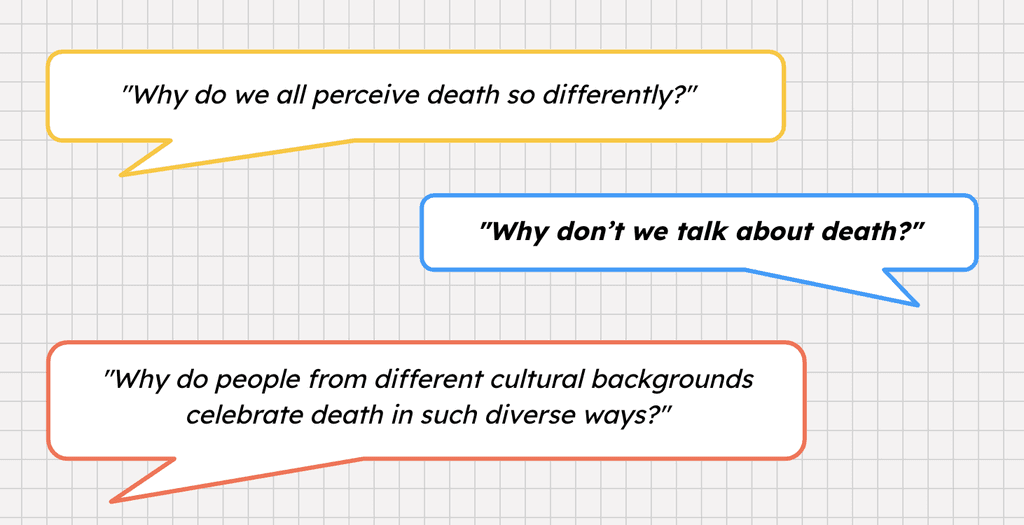
Thus, we choose to explore further in this topic, and hopefully uncover something surprising.
Two Sides of Death
When we talk about people's perception of death, there are two narratives:
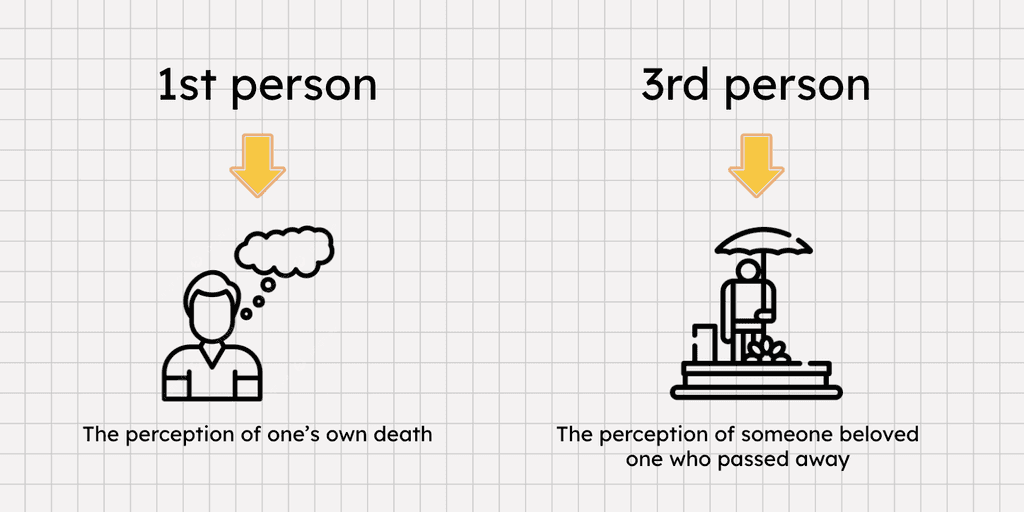
We want to address both perspectives during our interview.
V0 Hypothesis
As religious people may already have answers to life's big questions (or at least a strong tendency), our team wants to focus on people outside of a religious practice, thus our V0 hypothesis:

interviews
Talking, Observing, Understanding death
Recruitment Method
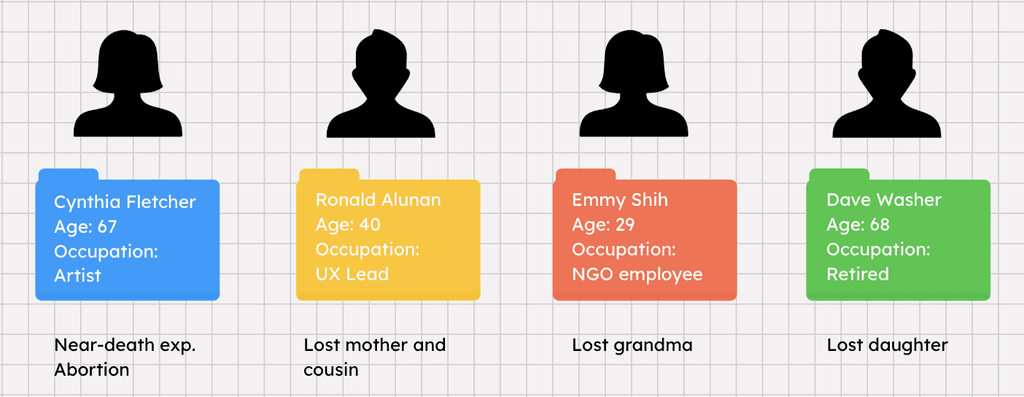
We recruited four people within our personal network, all connected by one thing: a personal encounter with death—either through loss or near-death experience.
Because the topic is so sensitive, we mainly reached out to people we already knew. That way, they’d feel more comfortable being honest and opening up during the interview.
Interview Environment
We intentionally chose to conduct interviews in participants’ homes. Sitting down with them face-to-face in their own space helped build trust and made it easier to connect, which allowed for more open, vulnerable conversations around the sensitive topic of death. It also allowed us to observe subtle environmental clues —photos, objects, or how they talked about things—that offered deeper insight into their relationship with loss.
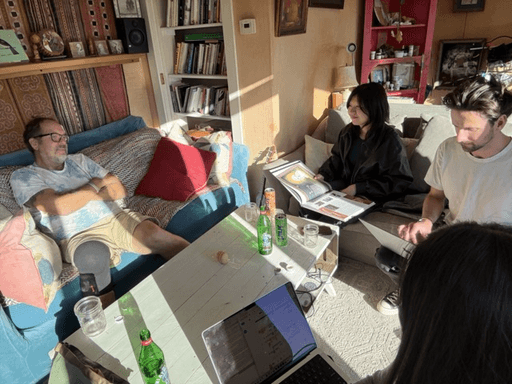
Interviewing at participant's house in San Rafael
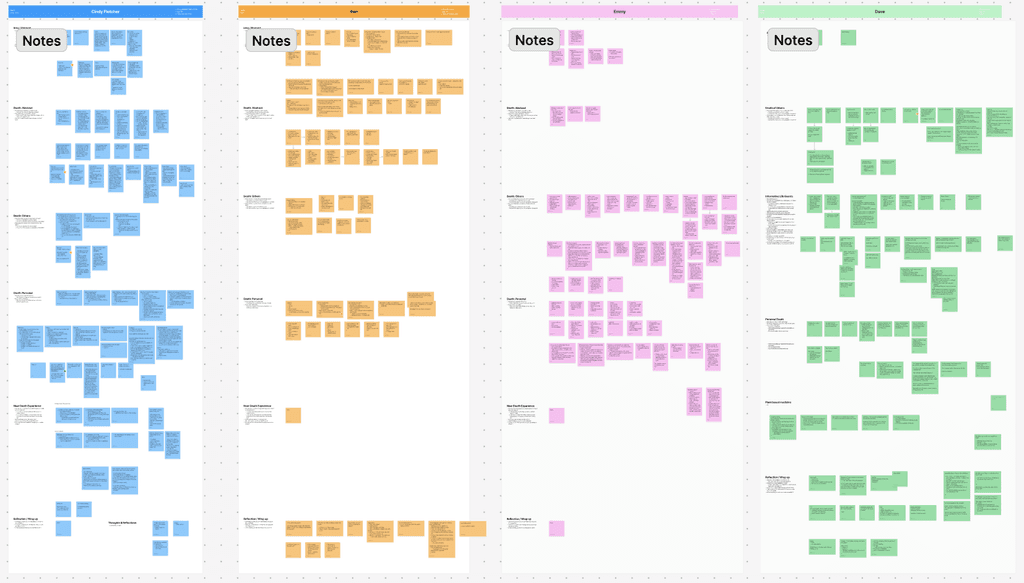
🔵 Insight #1: Social support & network are important
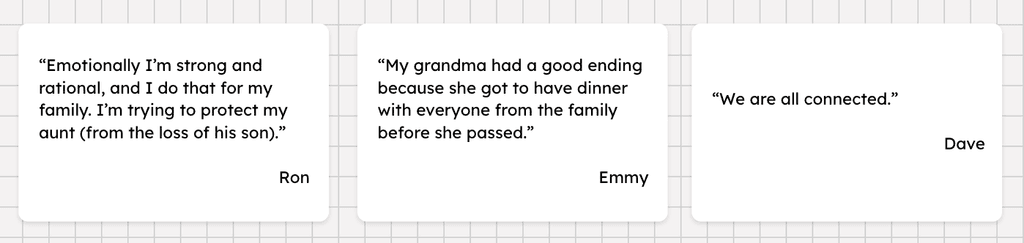
We’re social creatures—and when it comes to death, support from friends and family becomes more important than ever.
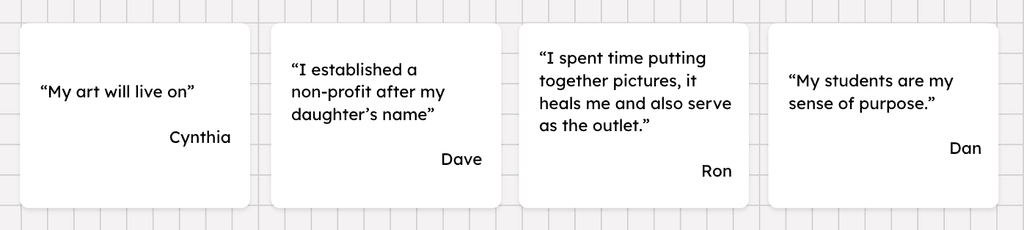
🟠 Insight #2: The concept of legacy provides comfort
Legacy came up in several interviews—whether physical or spiritual, it was something people found comfort in when thinking about death. Everyone had their own take on it, but the idea of leaving something behind that lives on mattered.
Forms of legacy include but not limit to: books, tattoos, foundations, photo albums, arts, etc.
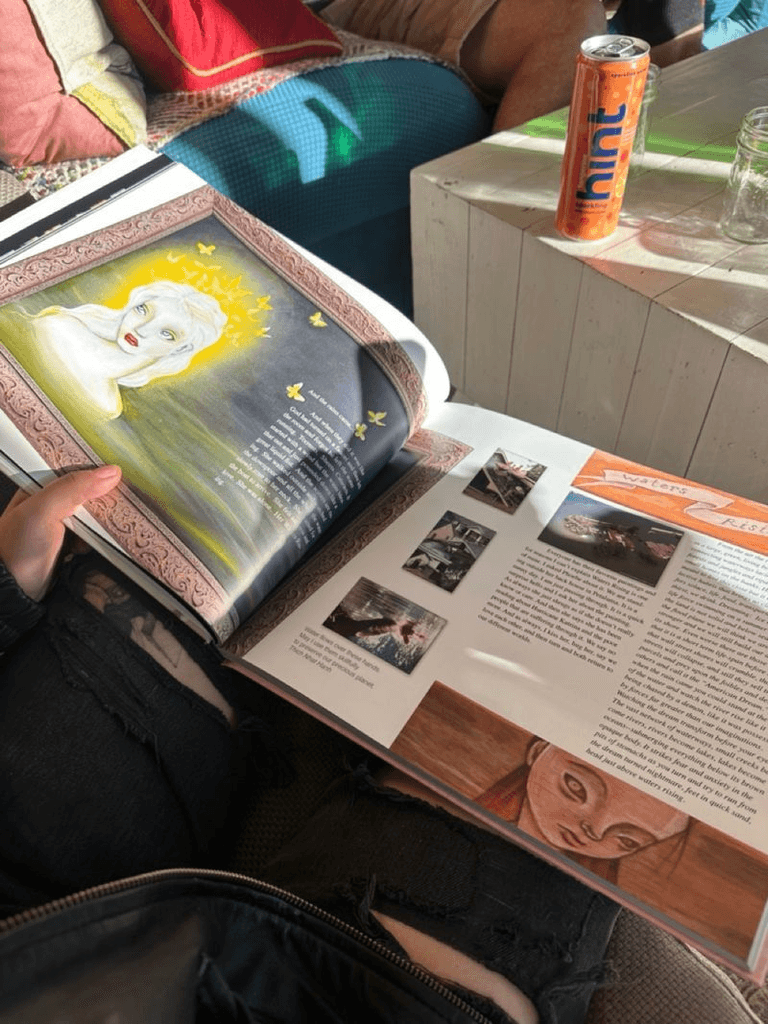
Participant showing us a book made from her daughter's artworks
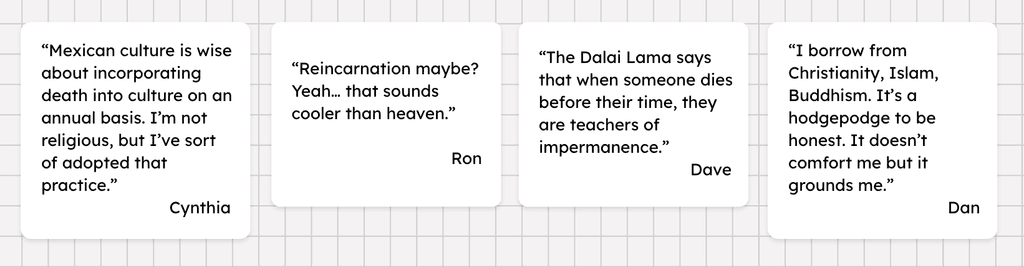
🟣 Insight #3: Atheist/agnostic borrow from religions to form their own conception of death
None of the people we talked to considered themselves religious. But when they spoke about death, they often pulled from different beliefs and practices—sometimes mixing things together without even realizing it. Their views felt personal, patchworked, and open to new ideas.
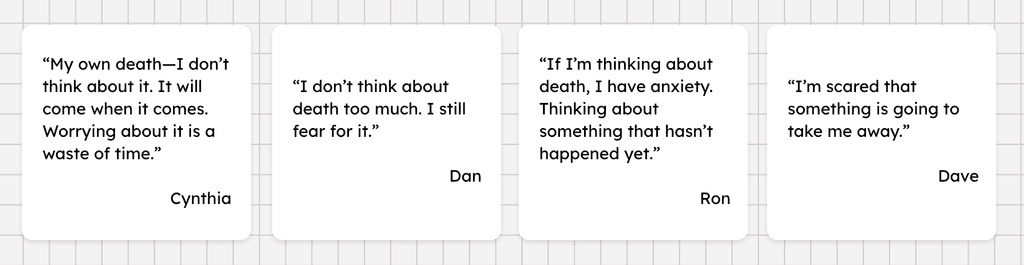
🔴 Insight #4: Human's avoidant nature of death
It might seem like an obvious insight, but it’s one we couldn’t ignore—if we’re designing something around death, we have to face the fear and anxiety that comes with it.
Death is something people naturally tend to avoid. Nothing is going to change the nature of it.
The Death Pickle
We found ourselves facing a tough question:
You can’t make someone accept death—just like you can’t force them to like pickles.
So how do you design for something people instinctively avoid?

Image created by generative AI
Problem statement
rethinking death through the lens of life
Breakthrough - the Fourth Interview!
“Embracing the little moments in life helps me combat my fear of death.” - Dan Sevall
Our #4 interview unveiled an enlightening insights: death and life are two sides of the same coin. Death is what gives life meaning, just as life is what gives death weight.
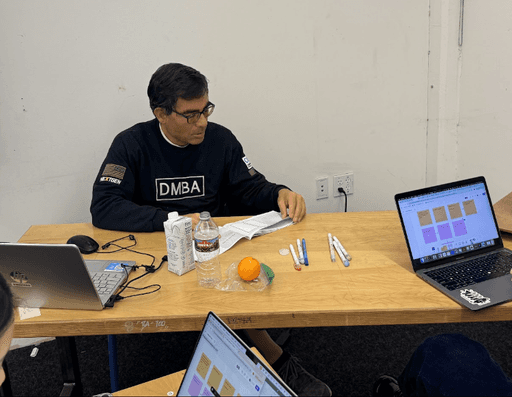
Interview with Prof. Daniel Sevall
Based on our new discovery, we decide to shift our focus from helping people cope with death, to what it means to live a meaningful life. Here's our new problem statement:
"How can we support people in reflecting on their life’s meaning and legacy as they approach the end of their journey?"
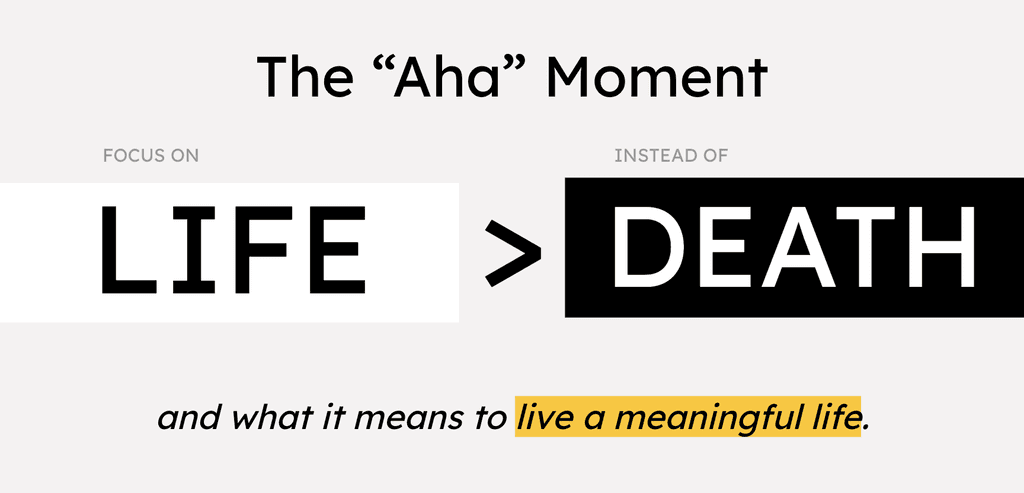
prototype
living letters
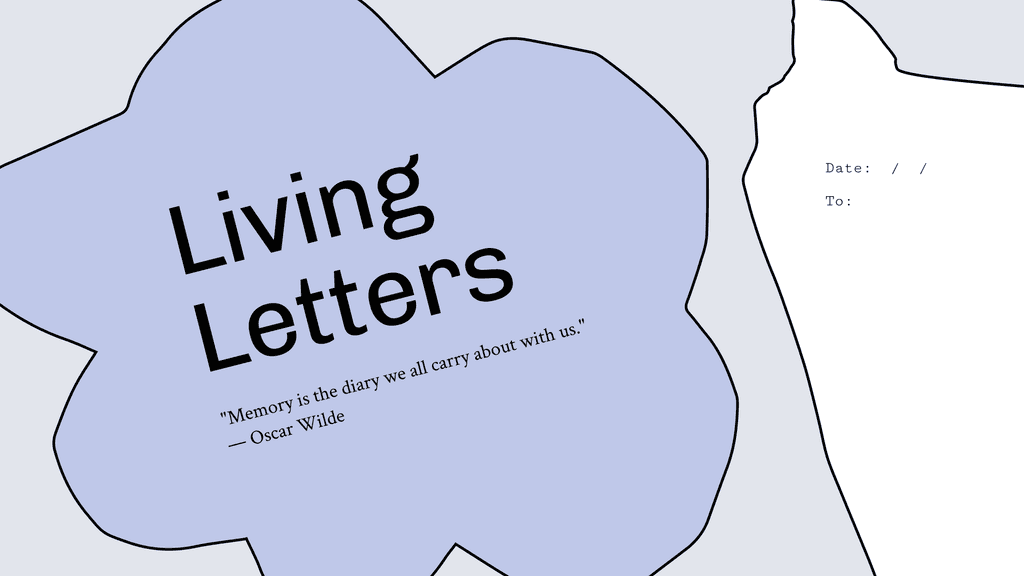
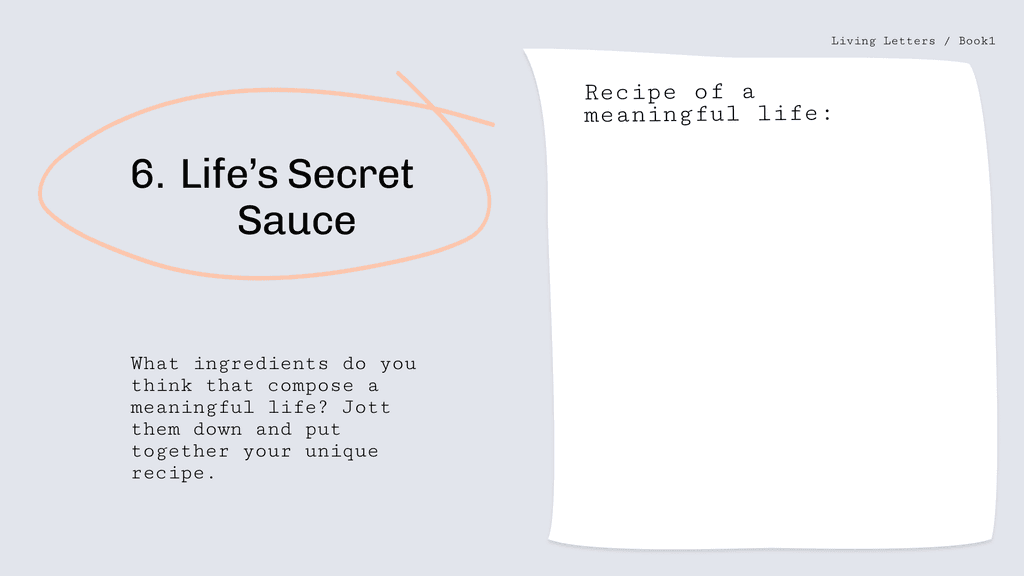
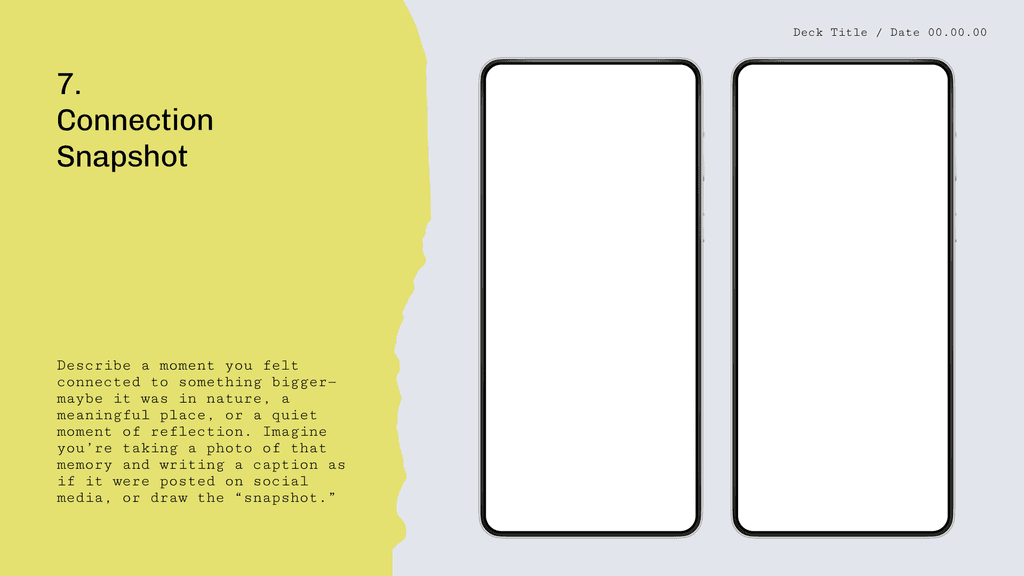
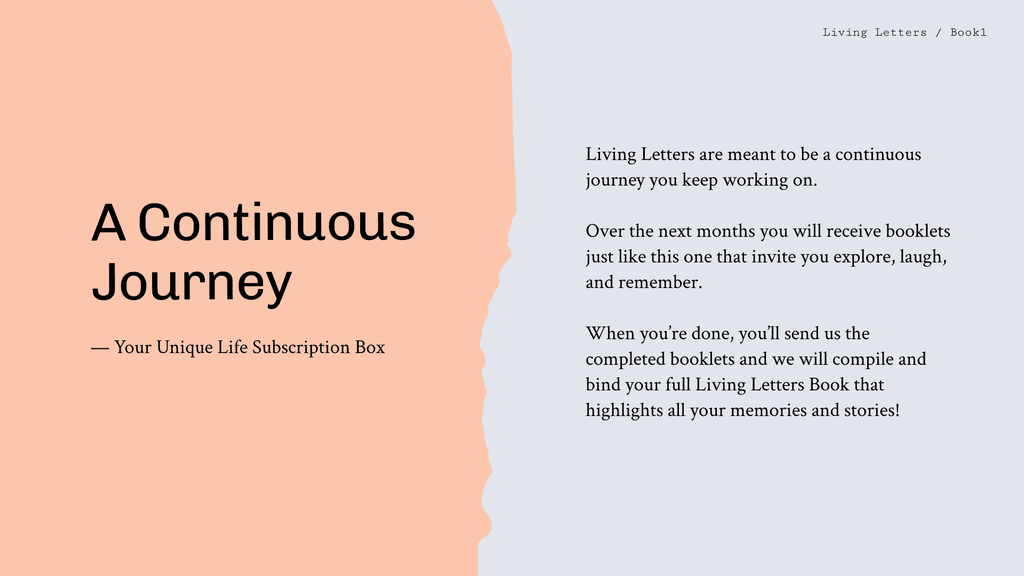
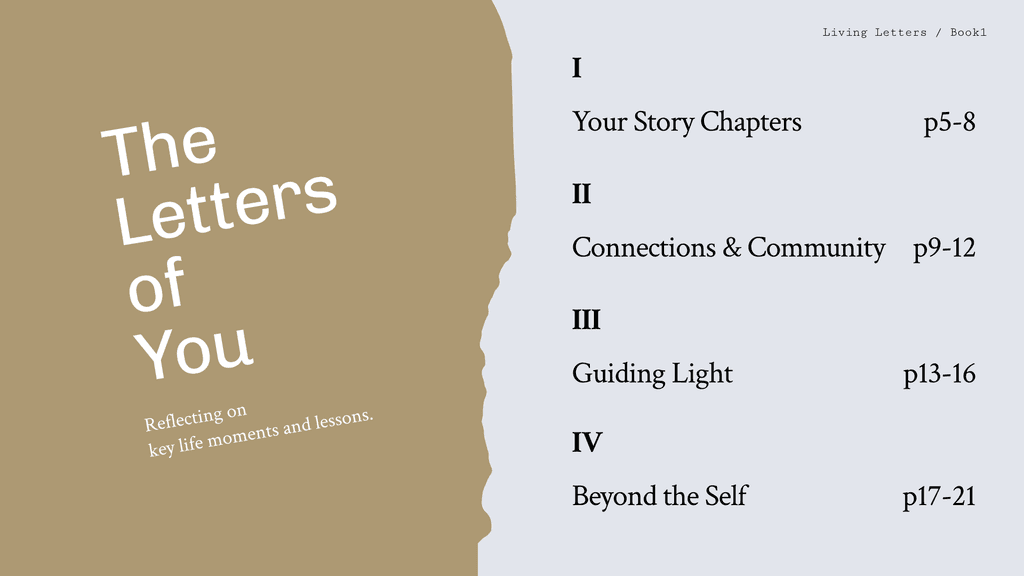
Our final idea is a subscription-based workbook for users to fill in & play with.
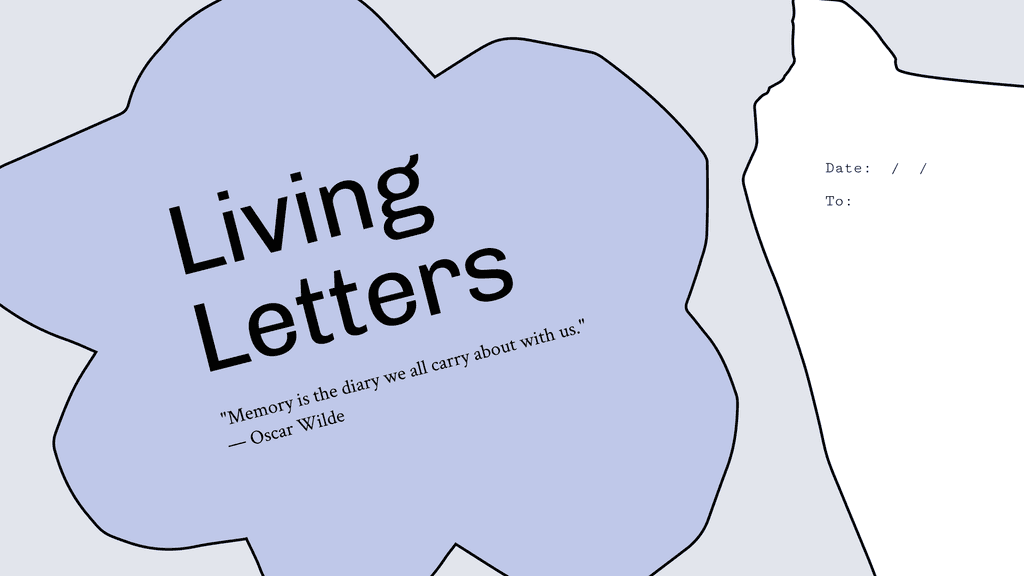
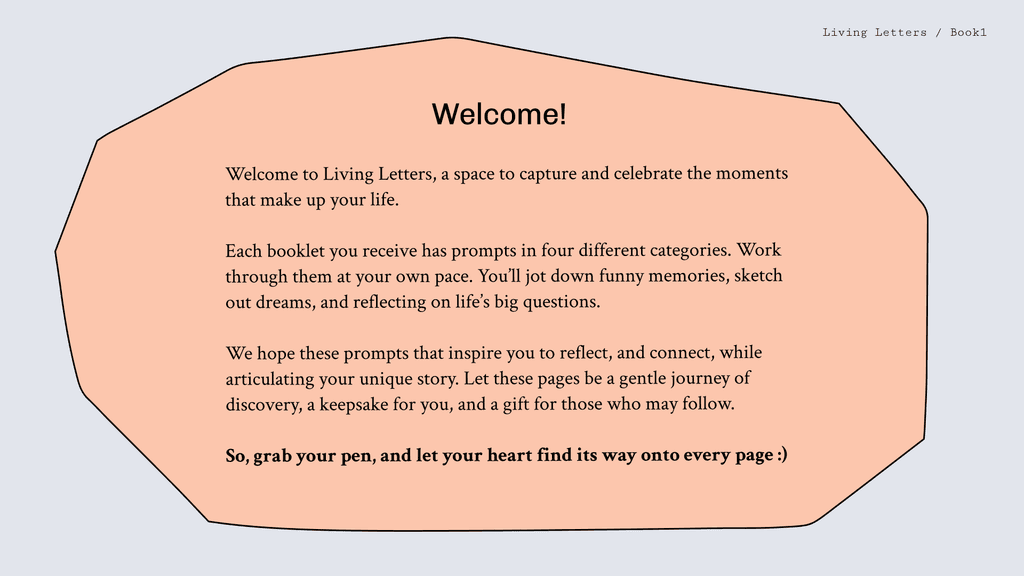
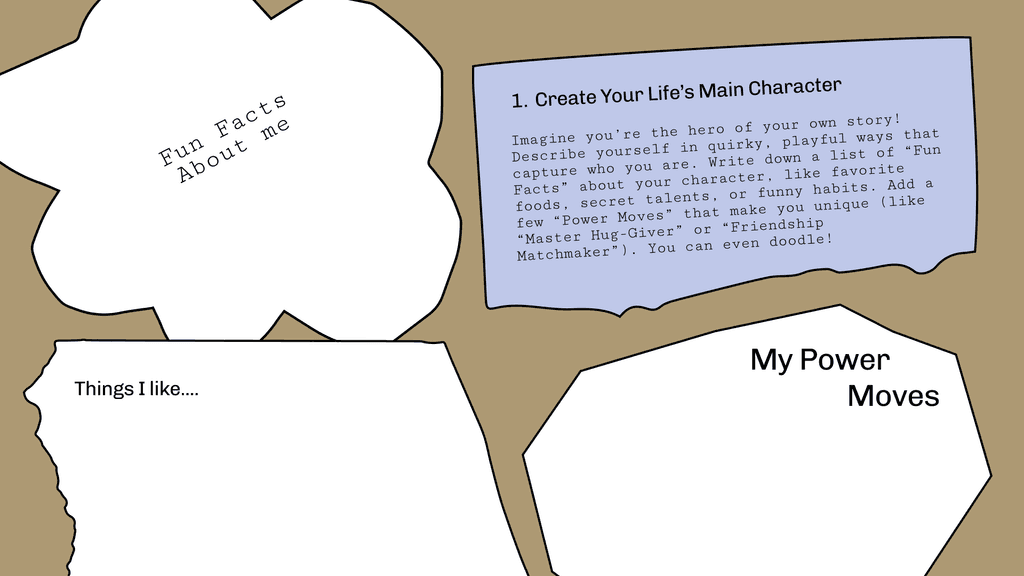
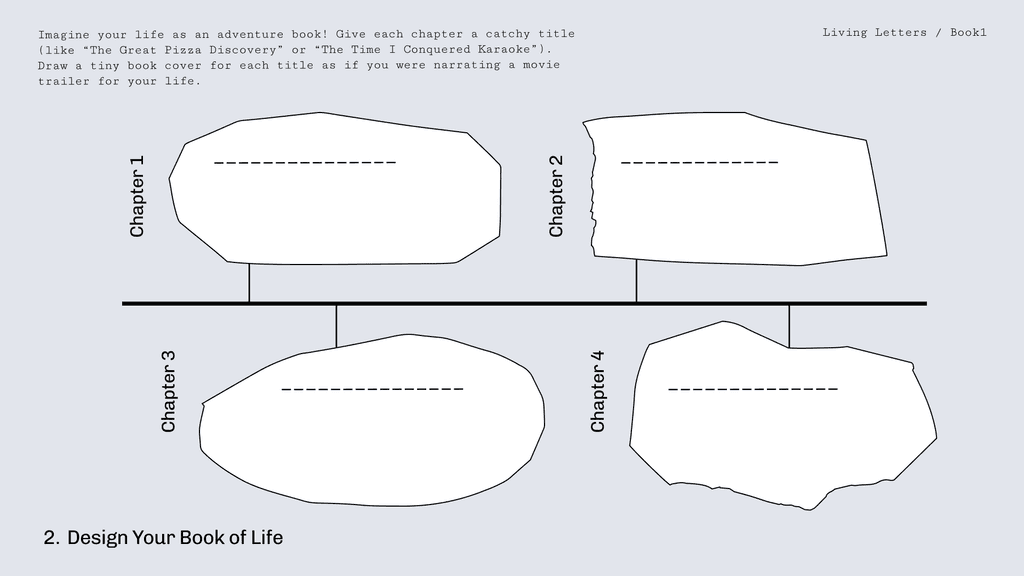
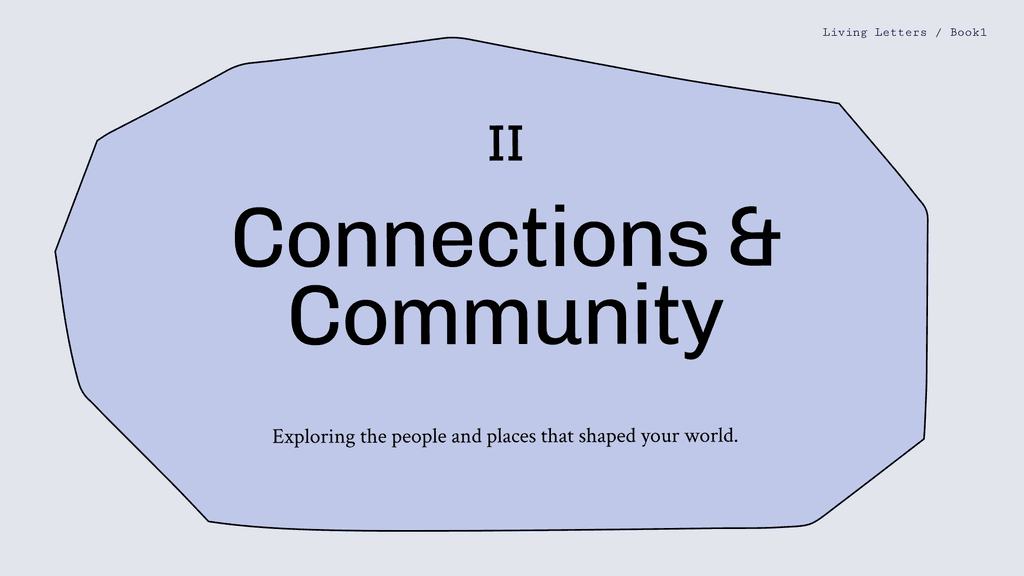
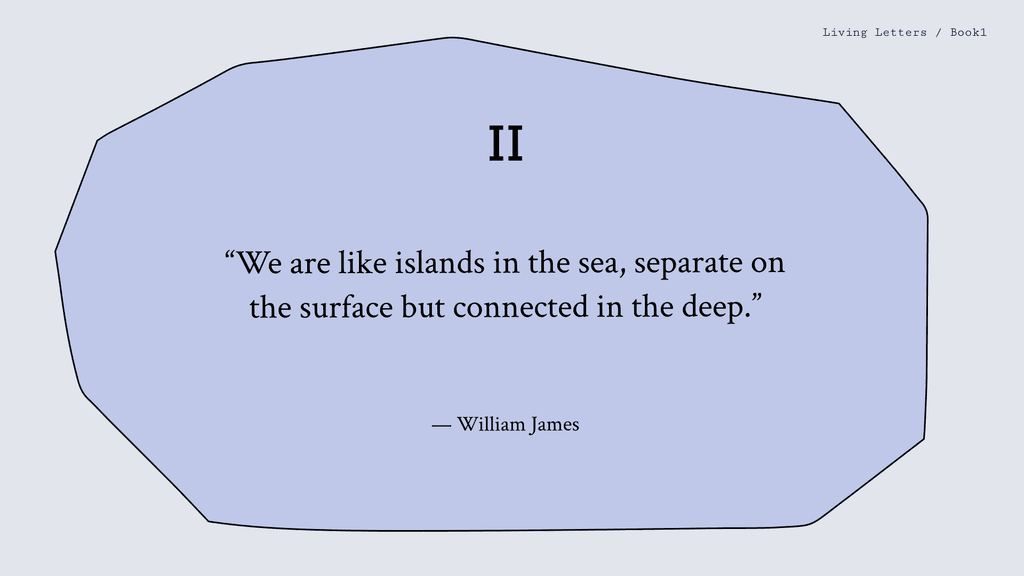
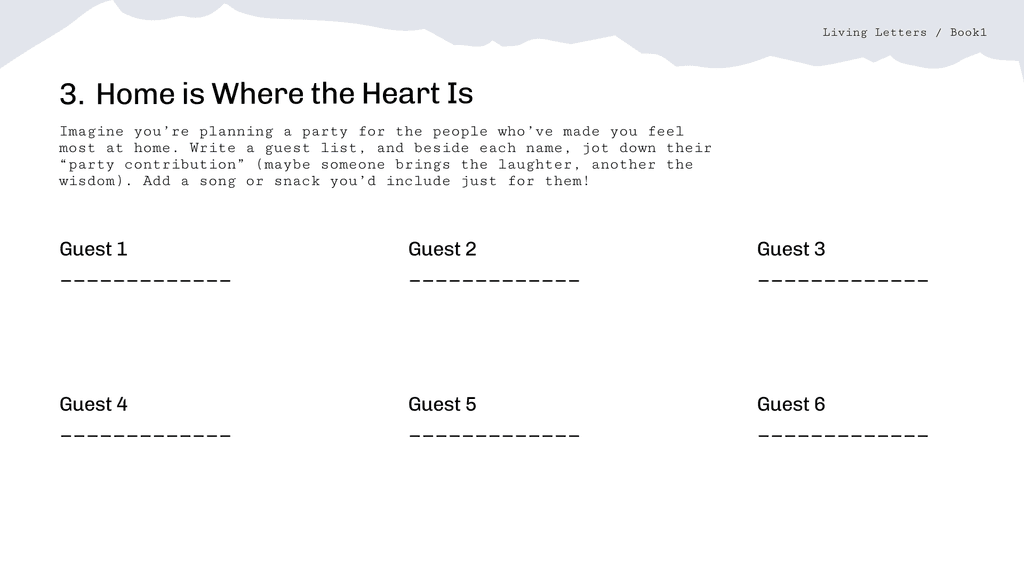
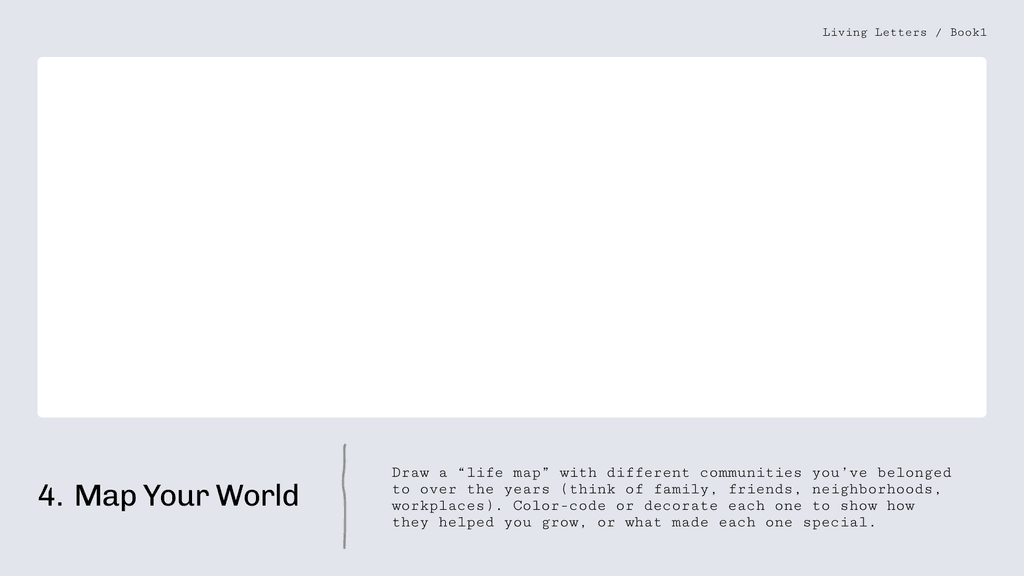
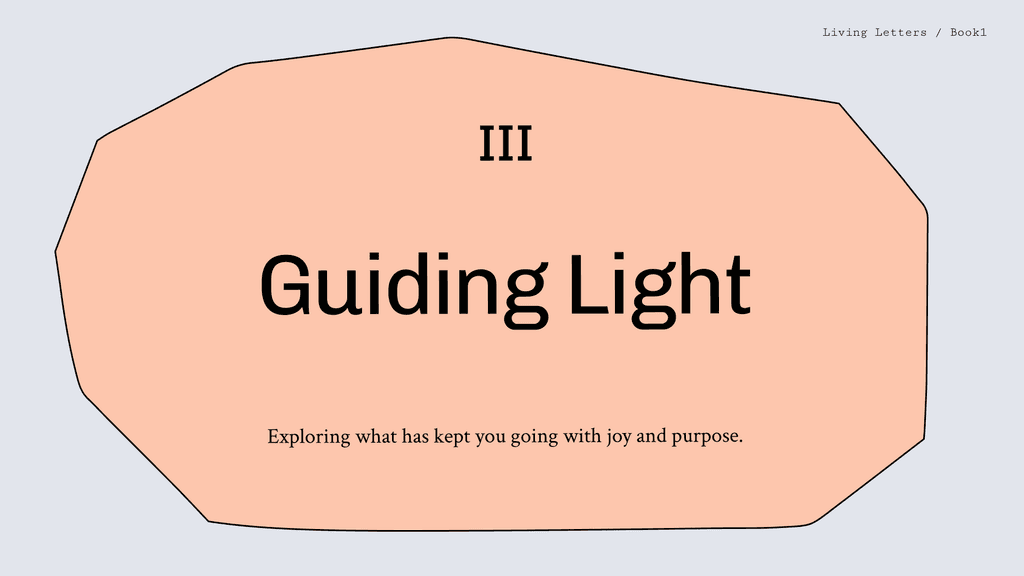
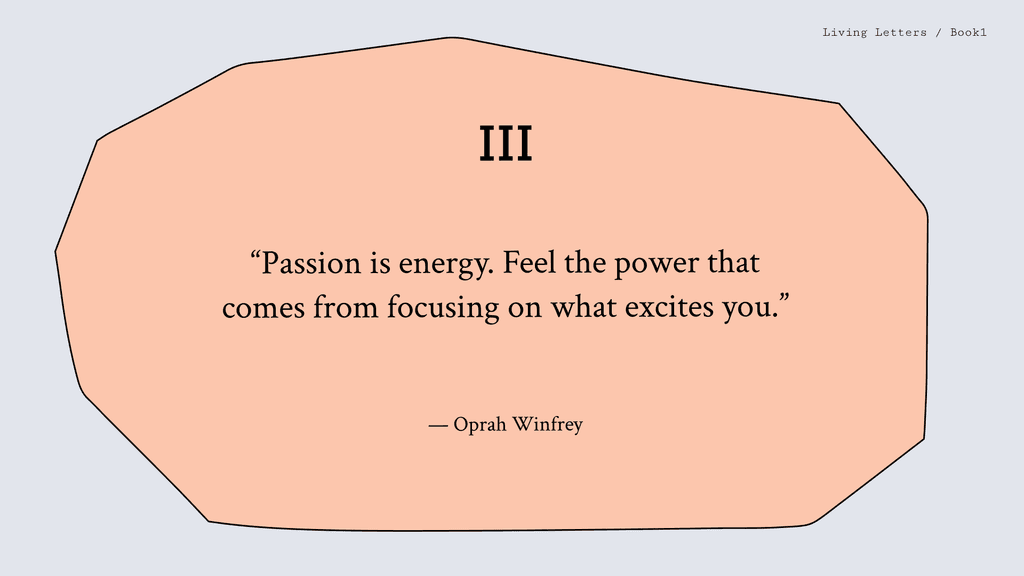
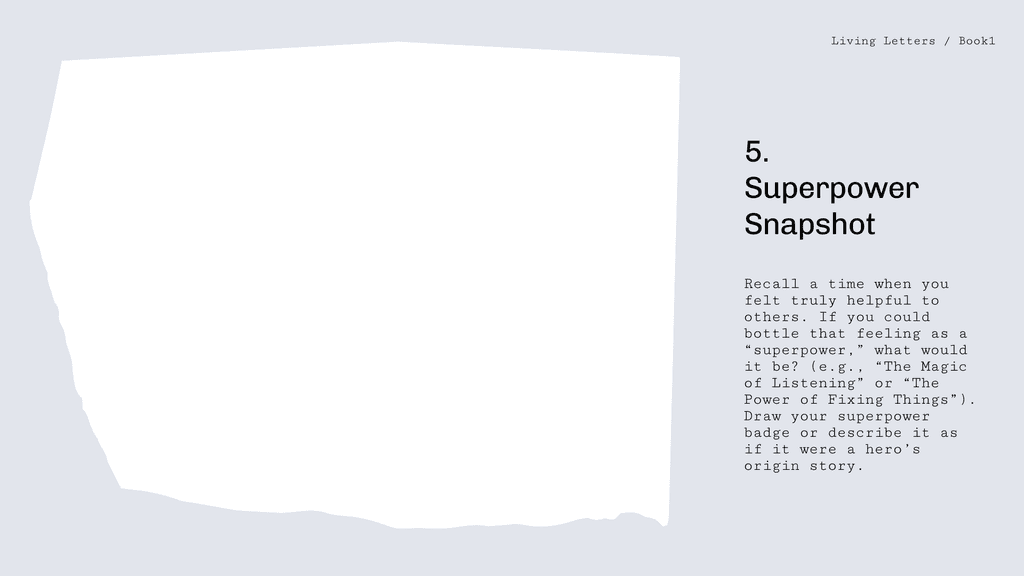
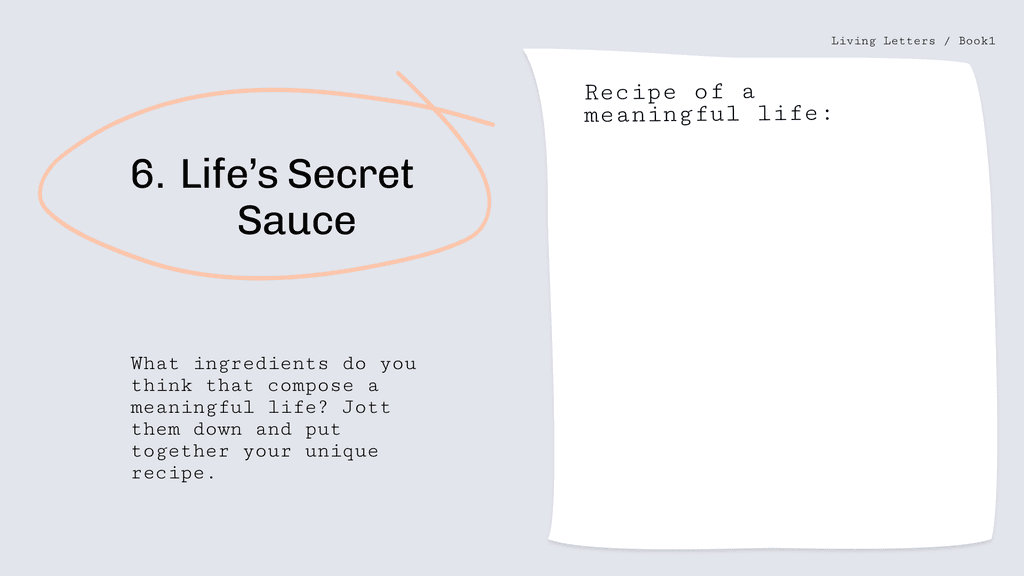
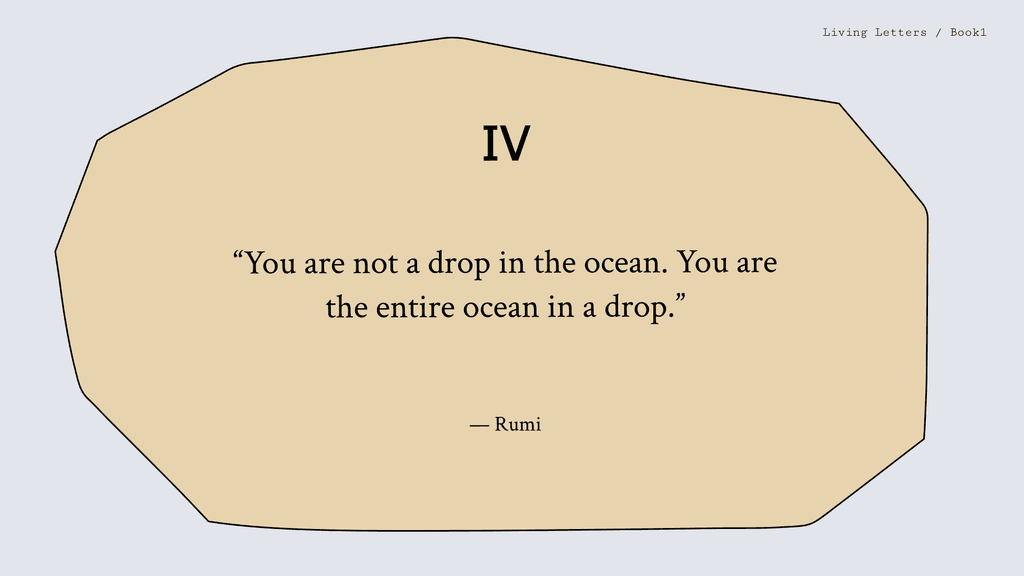
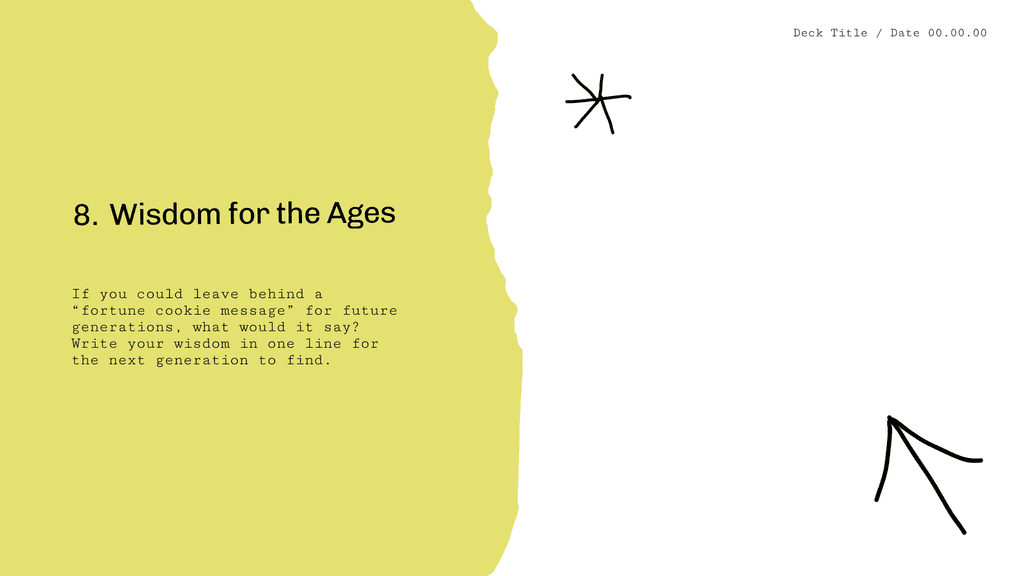
Creative Prompts
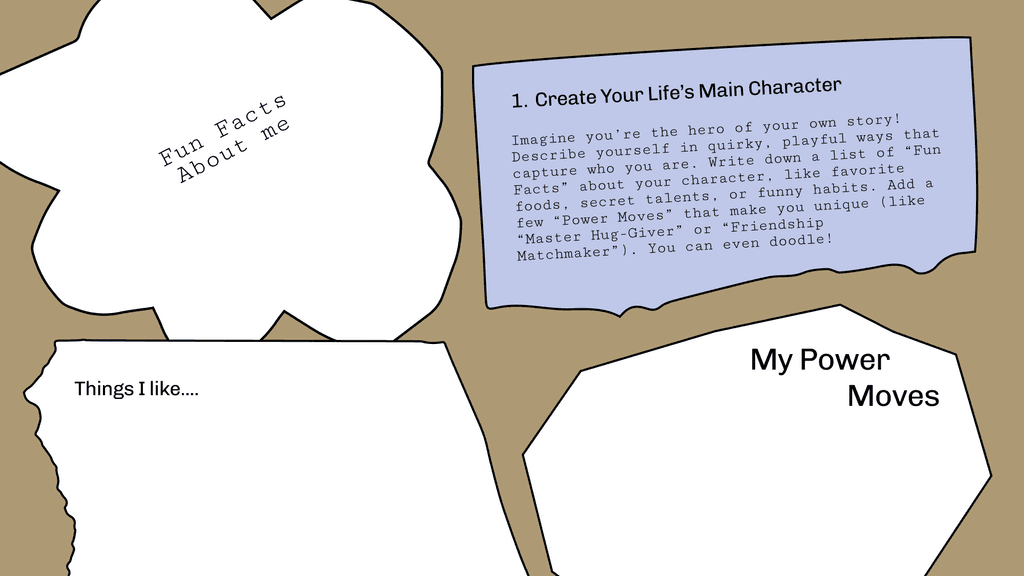
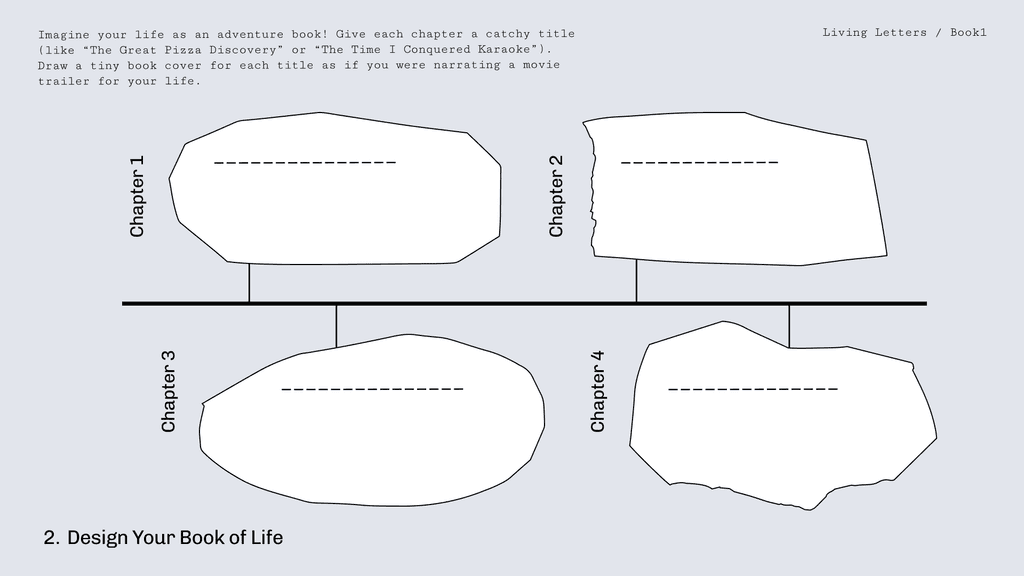
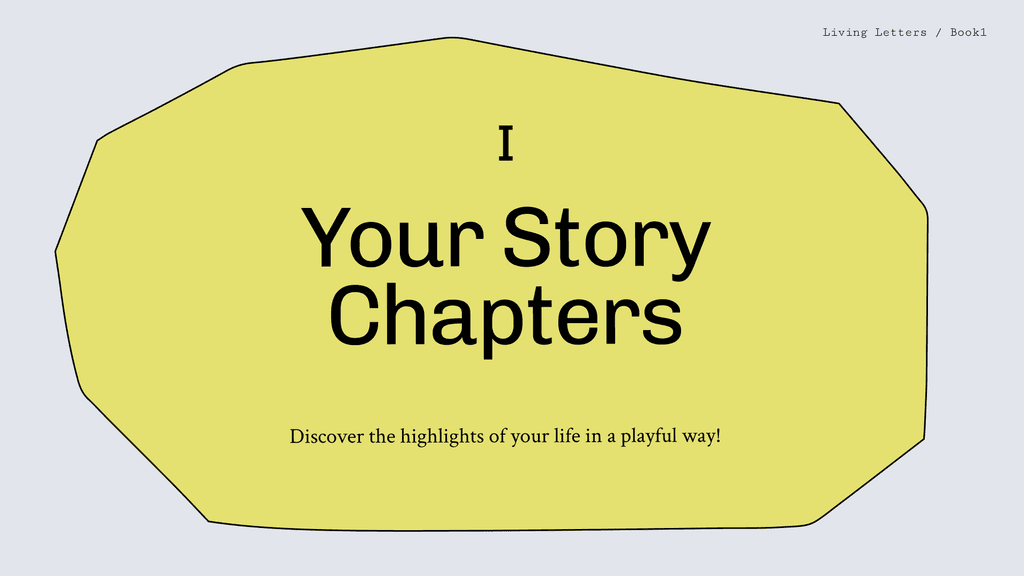
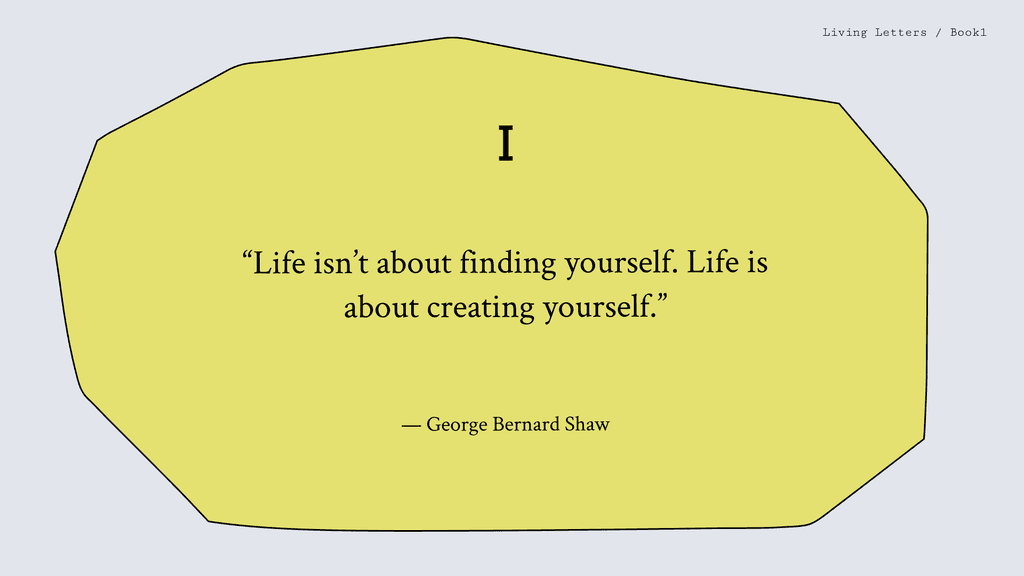
The workbook contains creative prompts designed to help users reflect on their life’s values and meaningful moments.
Subscription-based service
Each month, subscribers get a curated workbook. When they’re done, they mail it back to us.
A legacy that grows over time
Over months or even years, the returned journals are carefully collected, edited, and turned into two special keepsakes: a beautifully bound physical archive and a secure digital version.
The journal will be a personal collection of their stories, wisdom, and memories to cherish—and a legacy they can pass down to others. In this way, we hope to bring comfort to those facing the end of life.
User testing
When the idea Hits Home
Our prototype is built on two key assumptions, and our testing is designed to see if they hold true:
Assumption 1: This product will help people reflect on their life and legacy.
Assumption 2: Through that reflection, they’ll feel a greater sense of peace and accomplishment when facing death.
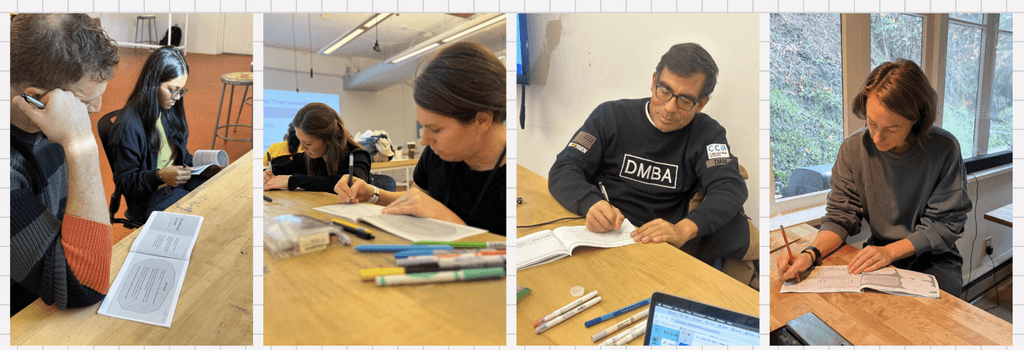
Participants working on our Living Letters
Result
Participants—especially those nearing the end of life—connected with the core concept and saw real value in it.
Younger participants, on the other hand, didn’t feel the same sense of calm through reflection.
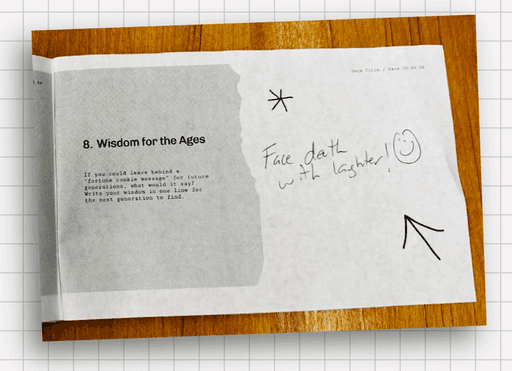
"Face death with laughter!" - Dan
Feedback
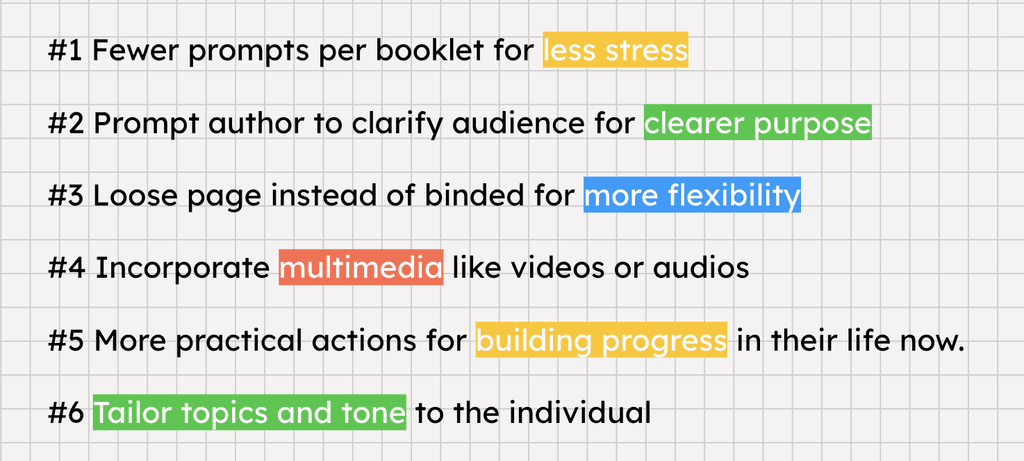
handoff & next step
testing assumptions & explore other formats
While our participants connected with the core idea, the booklet format we chose was based on one big assumption:
A physical booklet is the most accessible and comforting way for someone nearing the end of life to reflect and document their legacy.
But this isn’t the only path—we could also explore other formats like digital tools, guided interviews, or audio recordings.
Future Testing Plan
Moving forward, if we were to hand the project off to another research team, here's our suggested testing plan:
1. Recruit testers that have qualified conditions (at the end of their life)
2. Separate them into 4 groups, Digital format, booklet, interview guide, audio recordings.
3. Over a 3 week period, send one prompt per week, in their corresponding format.
4. Score response for: length, level of emotion, number of prompts completed, etc.
Future Research Plan
Market Research: take a look at competitor products and conduct a competitive analysis
Market Size: find the market size for this product
Business Model: find the cost structure and a way to make the business profitable
MVP & Funnel: In order to test the product in real world, we need to ask people to actually pay for it. Set up the funnel to get a rate of how many people will convert at the end.