branding
Strategy
CCA DMBA Messaging
Client engagement–led brand strategy for HNWI donor expansion.
TL;DR
Work Type
Team of 3
Timeline
Sep 2025 - Dec 2025 (4 months)
Context
Client-facing school project
Tools Used
Market Testing
Project Goal
Define a donor-facing messaging strategy that enables Youth Power Fund to engage High Net Worth Individuals as part of its next phase of growth.
key constraints
As a growing nonprofit, YPF operated with limited access to standardized impact data and donor-specific insights, requiring strategy to be developed under conditions of partial information.
key Approaches
Focus Groups, 2x2 Matrix, Customer Archetypes, Brand Analysis
The Challenge
CCA is facing a crisis
Program Context: What Is the DMBA?
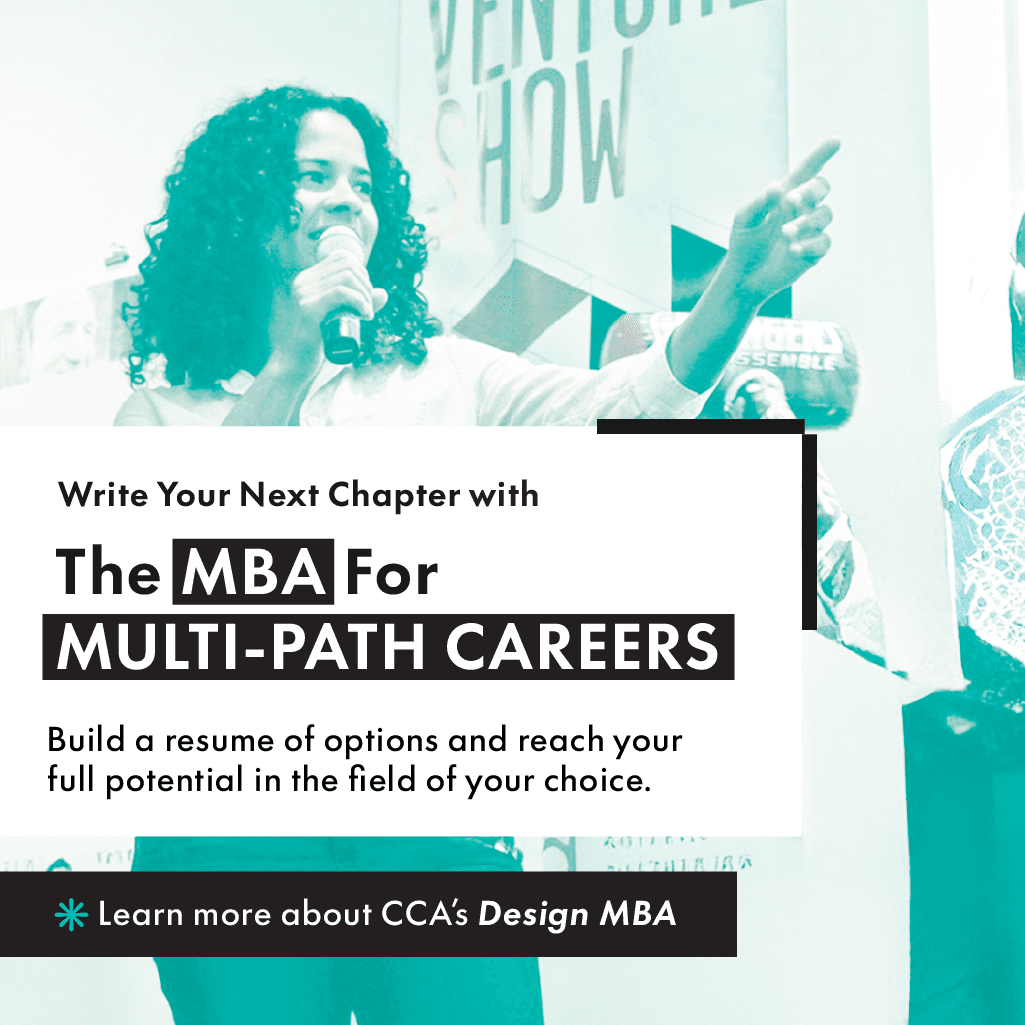
The MBA in Design Strategy (DMBA) at California College of the Arts is the first design-focused MBA program in the United States housed within an art and design institution. Launched in 2008, the program was created to merge creative design with business management—pioneering in applying human-centered design, systems thinking, and innovation methods to core business practices.
The Problem: A Decade of Decline
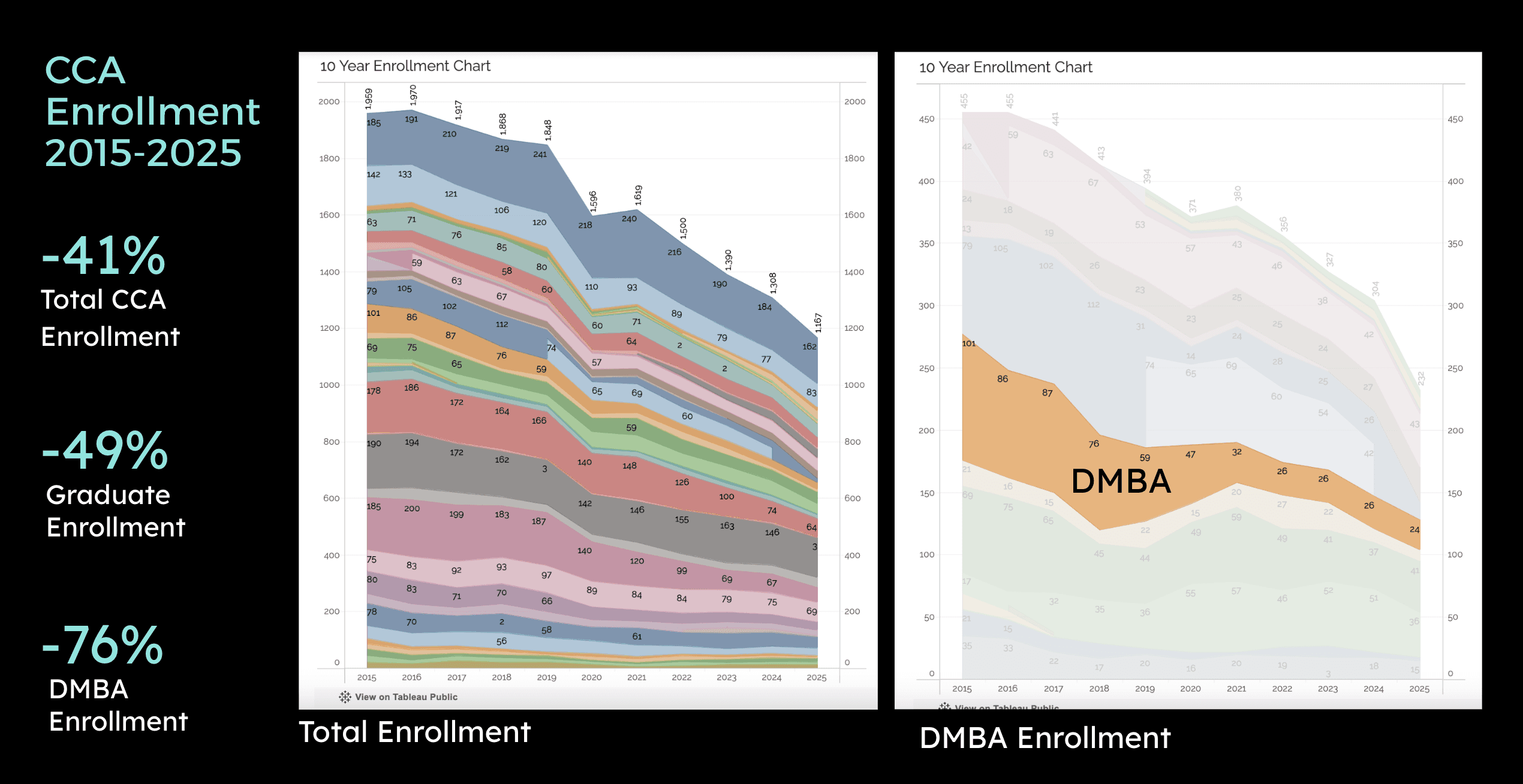
Over the past decade, CCA has experienced a sustained enrollment decline. From 2015 to 2025, total enrollment fell by 41%, graduate enrollment by 49%, and DMBA enrollment by a steep 76%.
Reframing the Problem: A Top-of-Funnel Failure
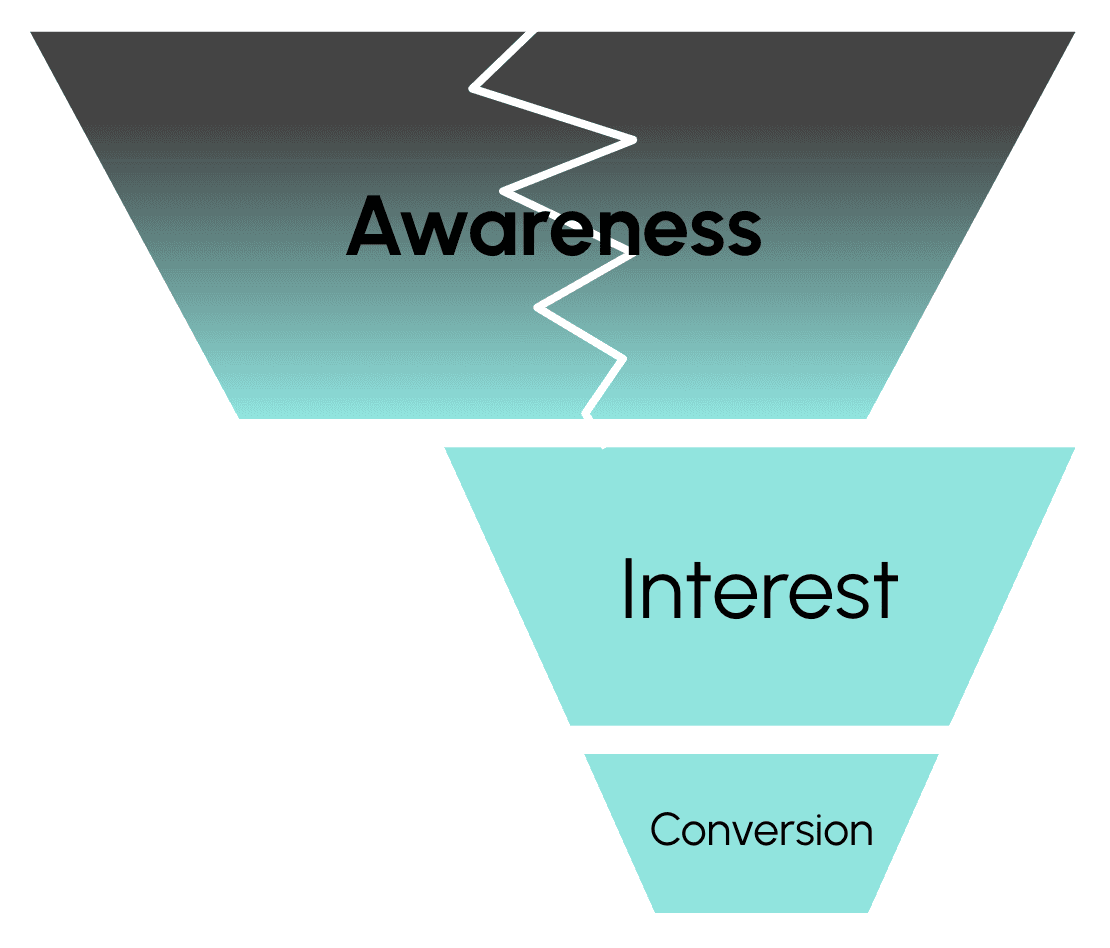
At first glance, this appears to be a demand or competitiveness issue. However, deeper analysis revealed a different pattern. The majority of DMBA students—over 80%—discover the program through alumni word-of-mouth, rather than institutional or public channels.
This suggests the program has a disconnection at top of funnel: it's not being rejected by prospective students; it is largely invisible to them. Positioned at the intersection of design and business, and housed within an art school, the DMBA rarely enters the consideration set of people searching for either traditional MBAs or design degrees.
This creates a structural blind spot:
The DMBA is not being rejected—it is not being discovered.
The Design Challenge
Our goal was to identify:
the right channels to reach a broader audience, and
a compelling, memorable message that increases penetration.
so the DMBA can expand beyond word-of-mouth discovery and re-establish itself as a visible, credible pathway for design-driven leaders.
Research
Understanding a Brand's Component
Research Approach: Building on Prior Work
Prior to this project, a previous DMBA cohort had explored the same enrollment challenge through internal positioning work and interviews with current DMBA students. To avoid duplicating existing research, our team was asked to take a different angle rather than repeat prior methods.
This constraint shaped our research strategy. Instead of re-examining internal perceptions of the program, we focused on external discovery behavior—how prospective students encounter, interpret, and assess the DMBA before it ever enters their consideration set.
The 4Cs: Understanding the Context Around the Program
To better understand why the DMBA struggles to surface, we analyzed the program through the 4Cs framework:
Category — A Design MBA does NOT fit cleanly into existing mental models of either MBAs or design degrees.
Customer — Ideal candidates span designers, strategists, career-switchers and even engineers, but are fragmented across different search behaviors and platforms thus hard to capture.
Culture — The program’s values align with hands-on, human-centered, impact-driven work, yet this is not clearly signaled at first touch.
Competition — The DMBA competes less with direct peers and more with alternatives such as traditional MBAs, MFAs, certificates, and bootcamps.
This lens helped us understand not just who the DMBA is for, but why it is easily overlooked in a crowded education landscape.
Channel Audit: How the DMBA Shows Up Today
Our conversation with CCA's Head of Marketing and DMBA Chair revealed that the DMBA currently relies heavily on CCA-owned institutional channels for discovery and promotion—including the CCA admissions pipeline, the official CCA website, and centralized marketing efforts.
These channels are primarily designed to attract traditional art and design applicants, not the DMBA’s intended audience of design strategists, career switchers, and mid-career professionals seeking leadership roles.
In contrast, the few channels that are truly DMBA-specific—such as alumni-led outreach, internal newsletters, events, and partnerships—operate at a much smaller scale and depend heavily on manual effort rather than repeatable systems.
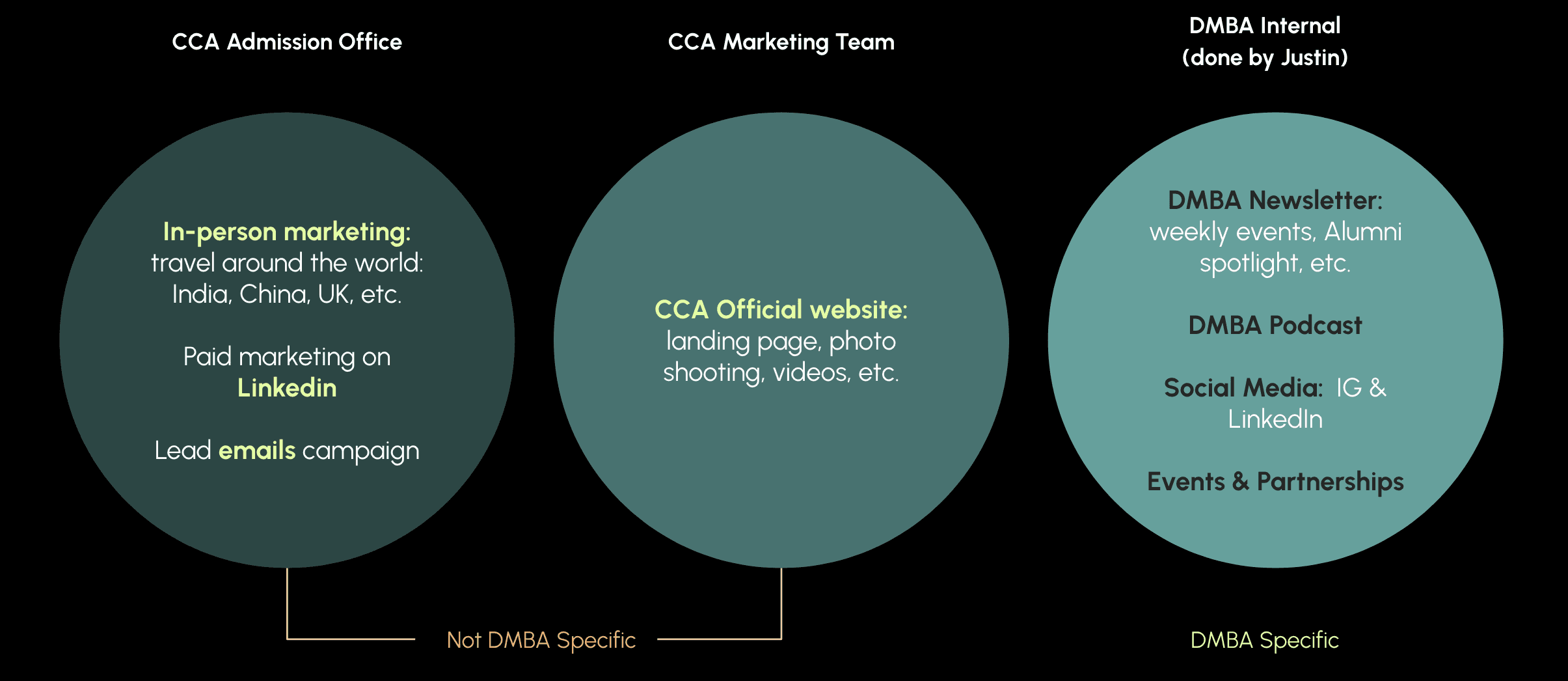
Our initial hypothesis was that the enrollment decline stemmed from a top-of-funnel issue; research confirmed this—and clarified where the breakdown occurs:
The DMBA shows up in CCA channels, not in the places its future students are actually looking.
Message Strategy
From CEPs to 5 Narrative Paths
Once we confirmed the DMBA’s discovery problem, the next question became: how do people enter this category in the first place—and where can we meet them?
Category Entry Points (CEPs)
We mapped Category Entry Points (CEPs): the situations, goals, and triggers that prompt someone to start exploring a Design MBA in the first place:
The Hybrid Gap the DMBA Fills
Rather than competing directly with traditional MBAs or design degrees, the DMBA emerges at the overlap of two unmet needs:
Traditional MBA programs attract people seeking leadership, salary growth, business credibility, and expanded networks.
Traditional design degrees attract people focused on craft mastery, portfolio building, and creative identity.
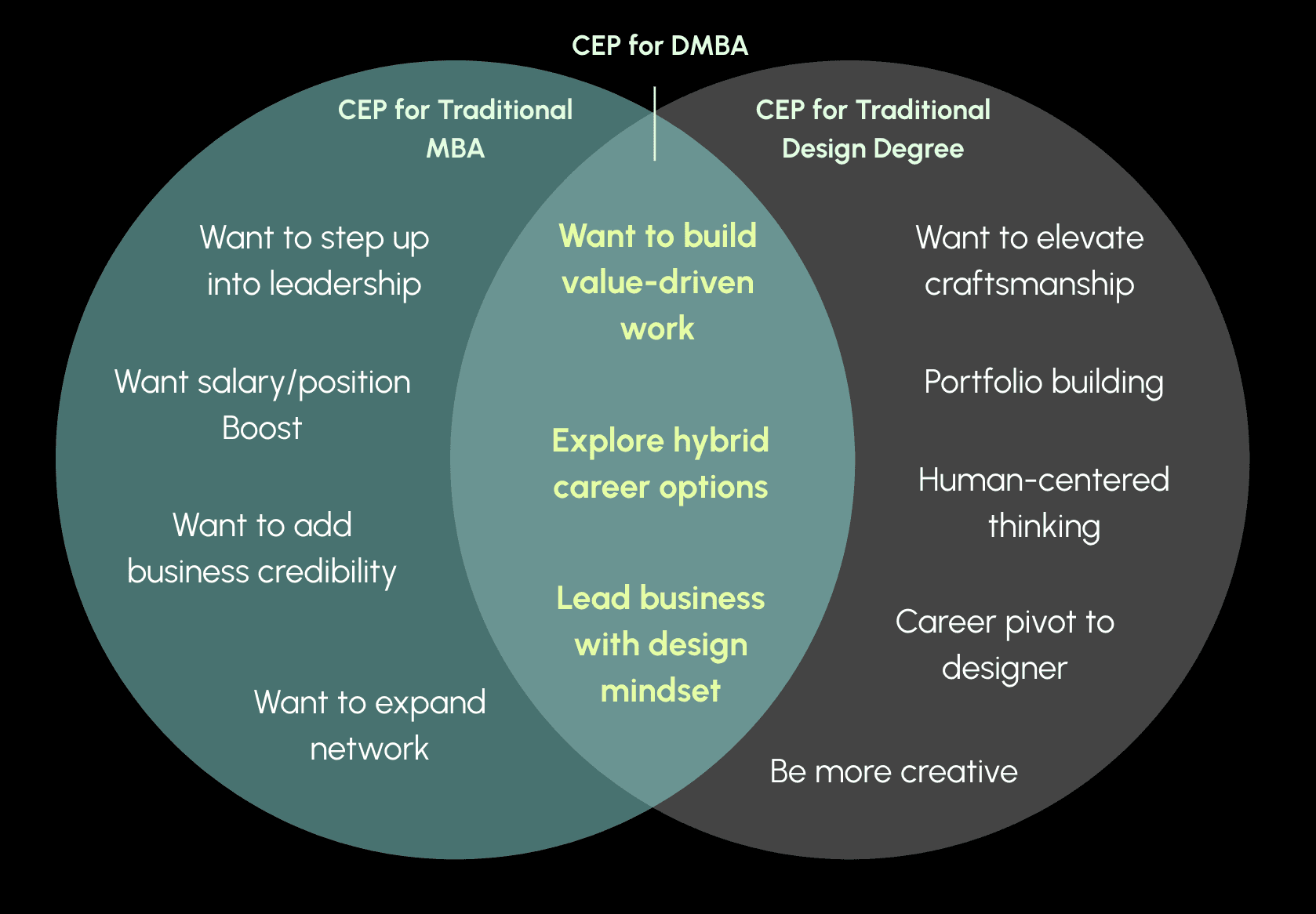
The DMBA isn’t a compromise between design and business—it’s a third path for those with hybrid talents—where business ambition meets design values.
Message Matrix: Translating Motivations into Narratives
Using the Category Entry Points identified earlier, we brainstormed a message matrix that mapped different CEPs to possible narrative angles.
Rather than optimizing for a single “perfect” message upfront, we treated messaging as a set of hypotheses to be tested.
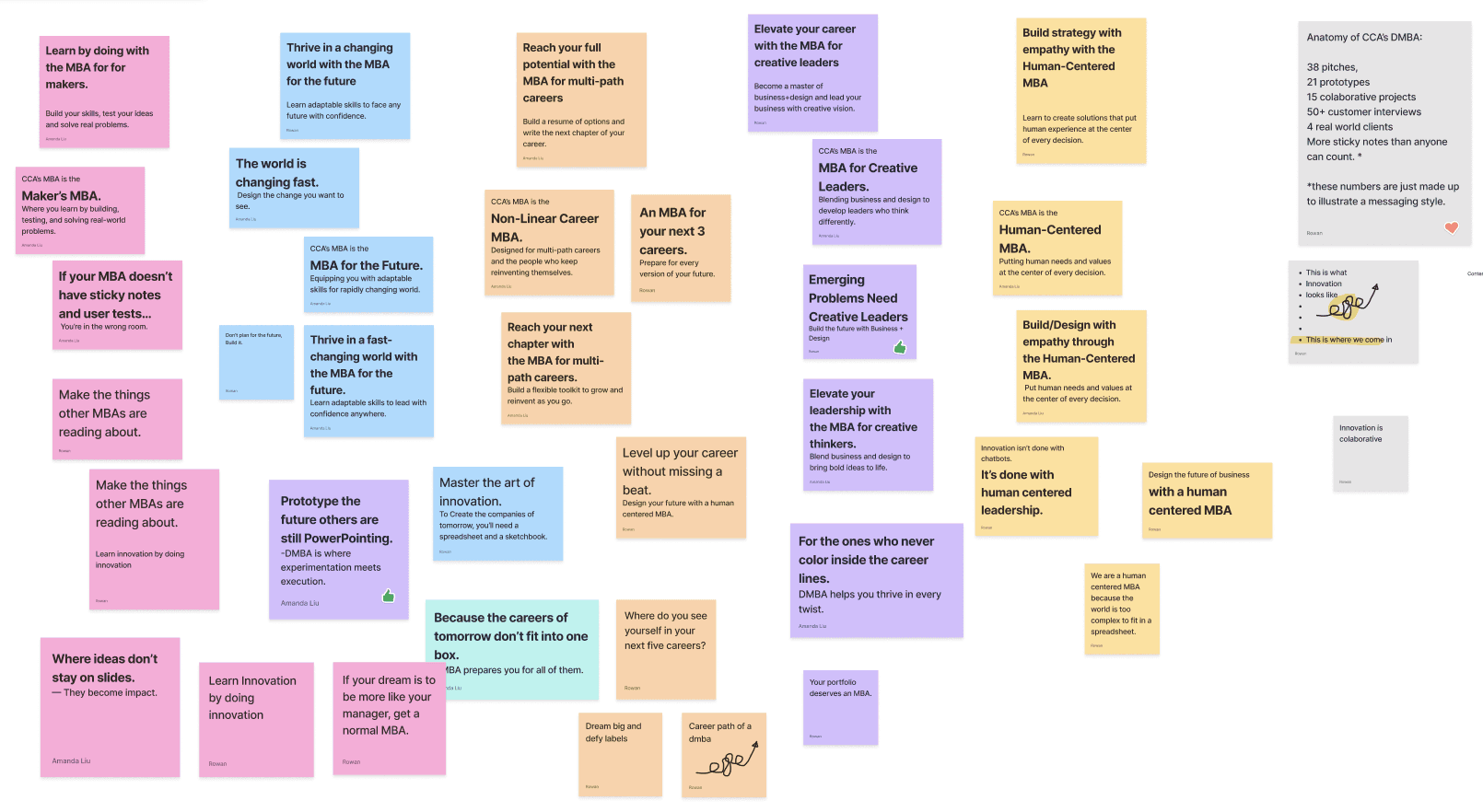
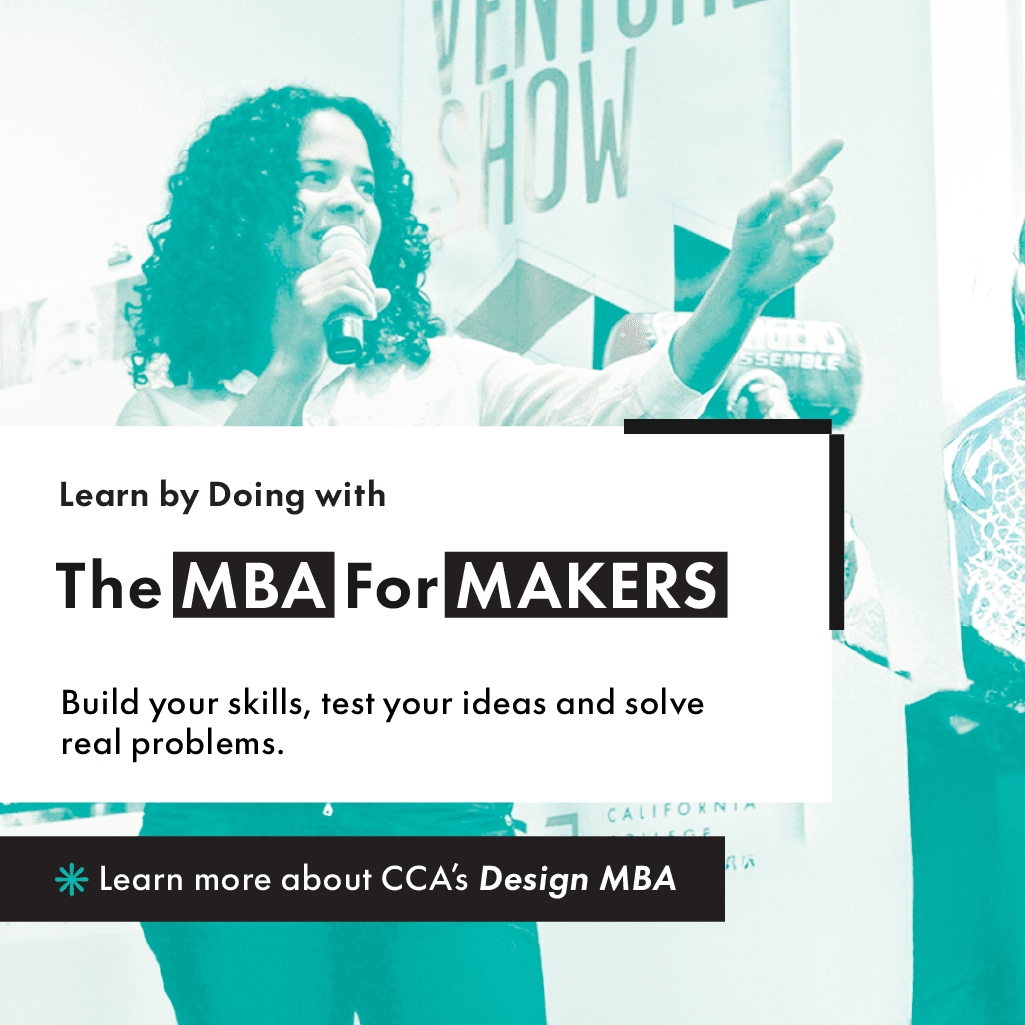
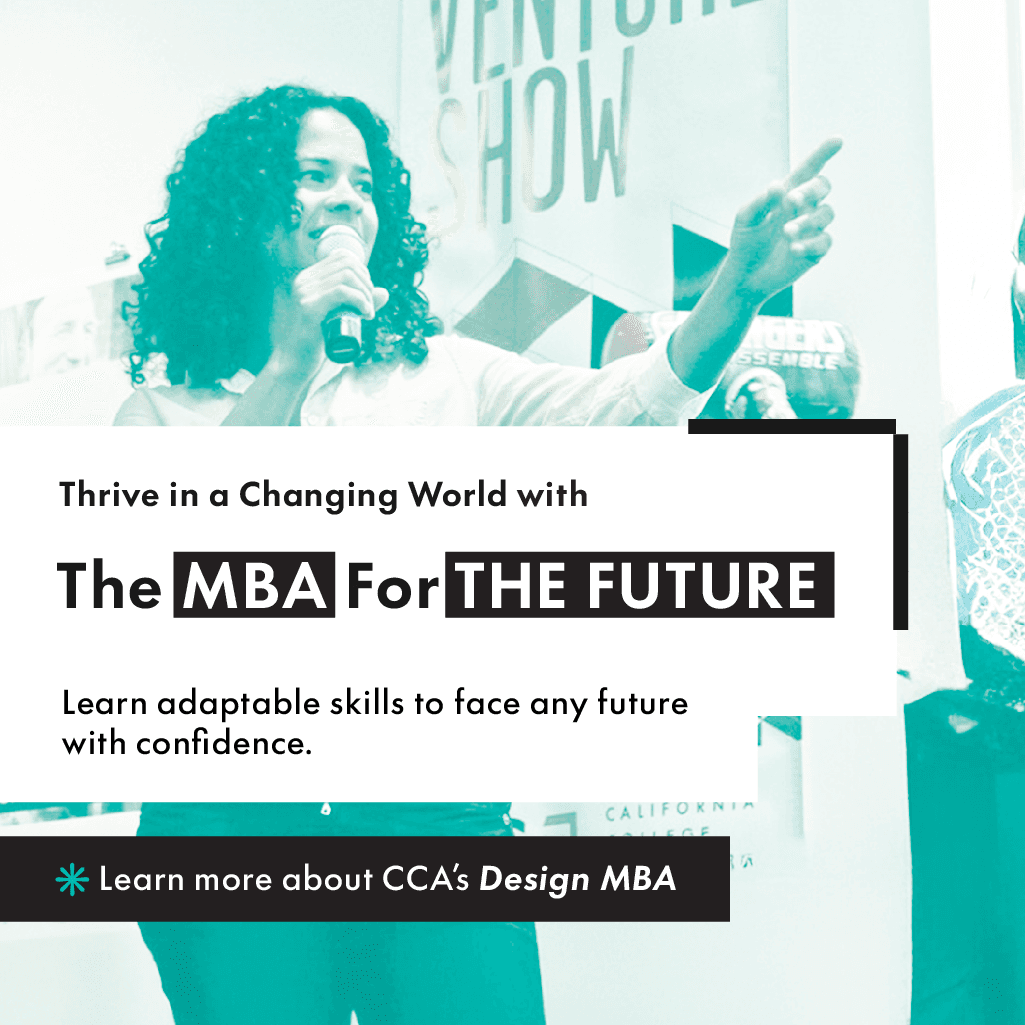
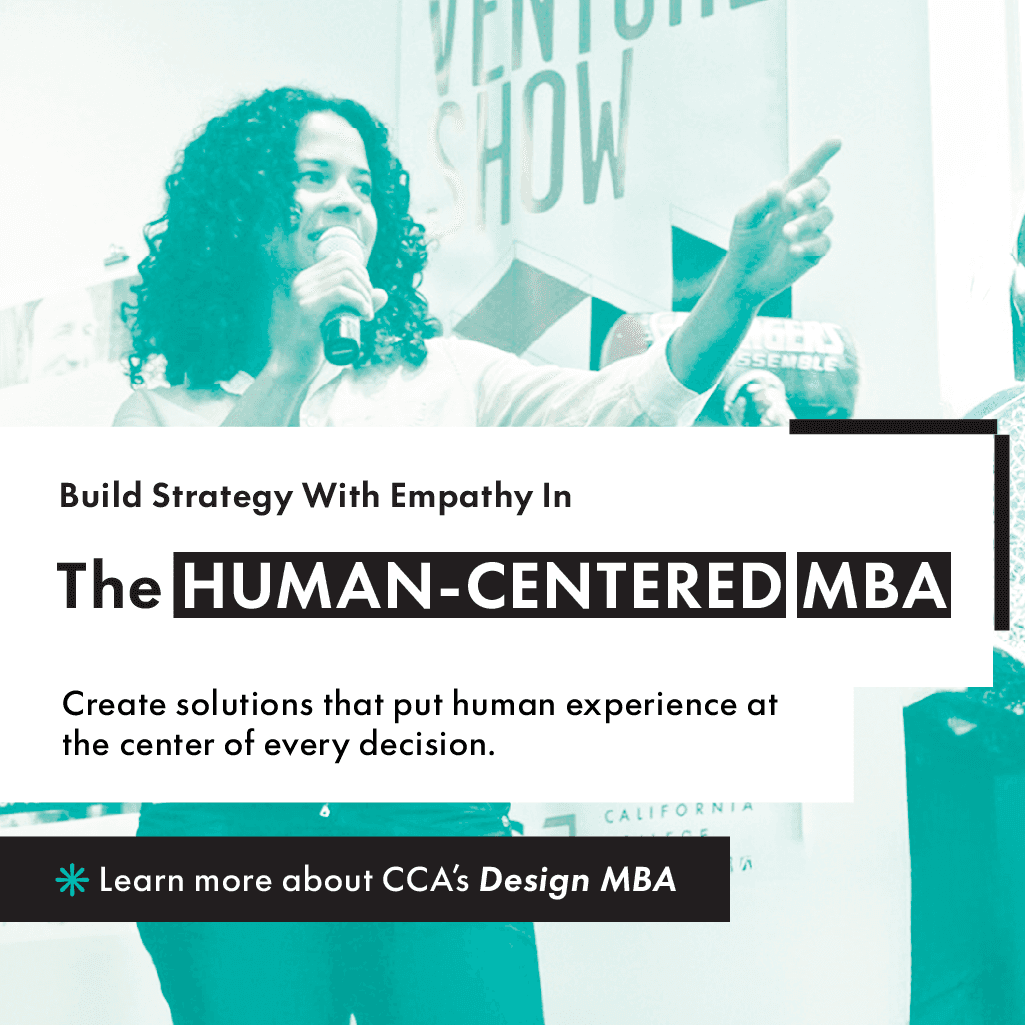
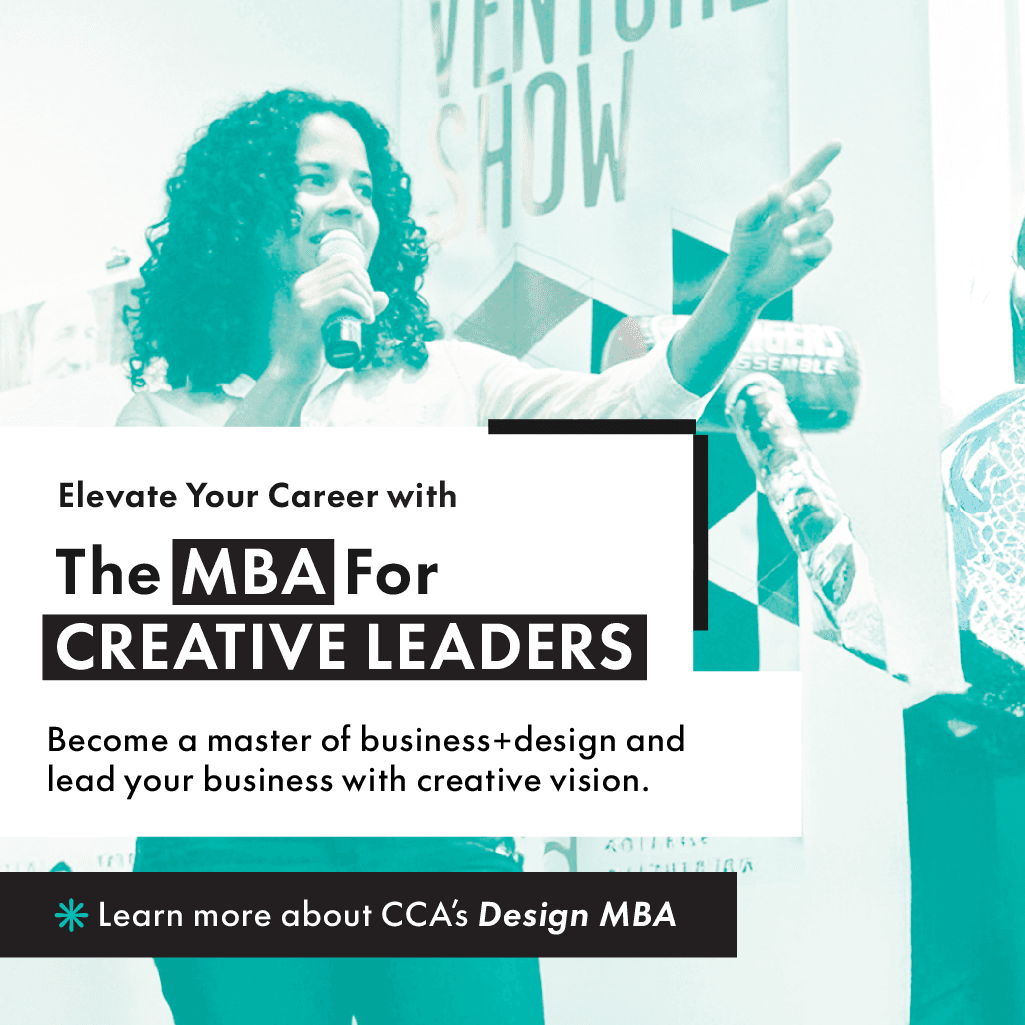
Five Distinct Message Directions
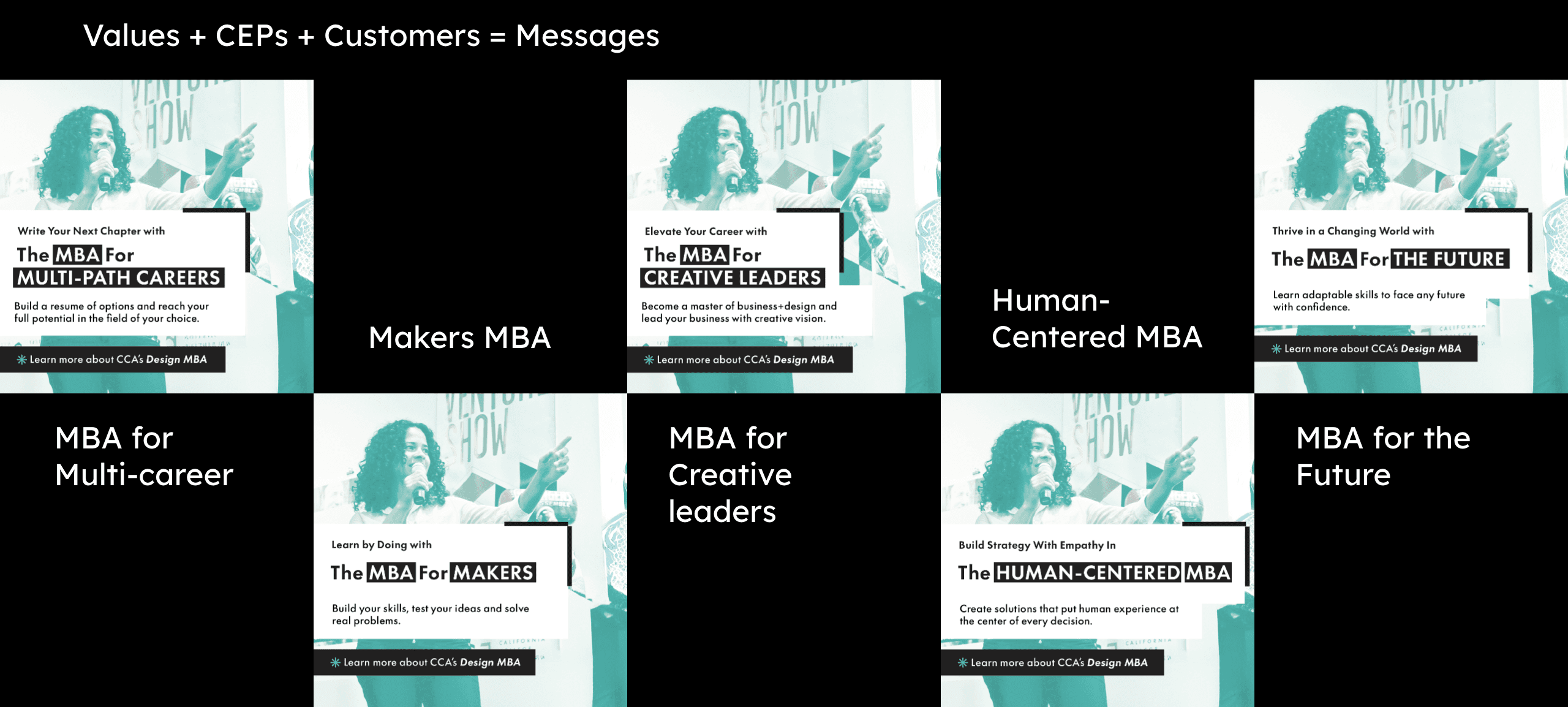
From the matrix, we selected five final message directions, each anchored in a different CEP.
To ensure that performance differences reflected message resonance—not execution quality, we intentionally controlled for creative variables:
All five messages used the same length and structure
Visual elements were kept identical across versions
Only the core narrative changed between posters
Each message direction was translated into a campaign-style poster, allowing us to isolate which story performed better when everything else stayed constant.
Market Testing
Translating Insights into Messaging Strategy
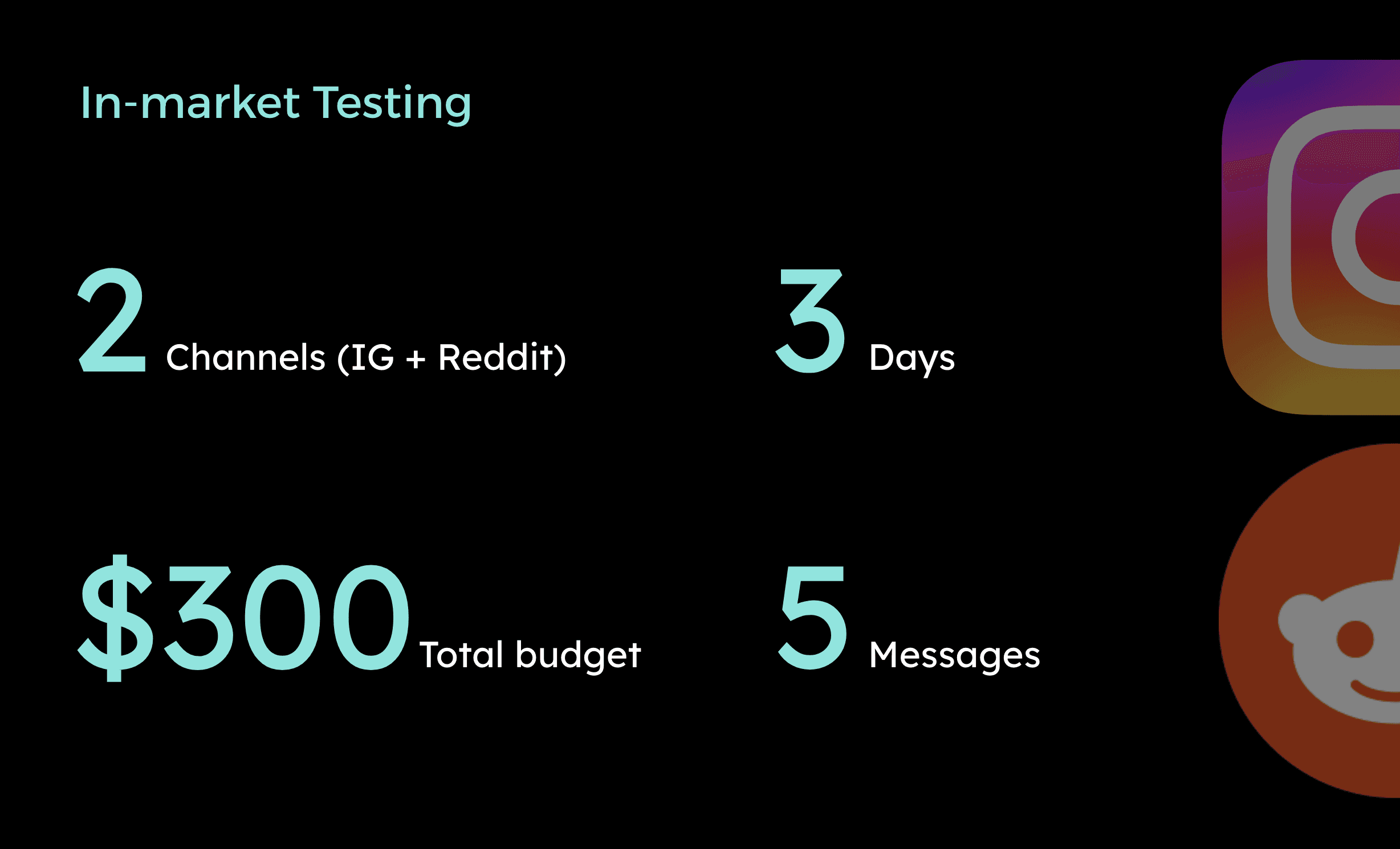
To evaluate which message resonated most, we ran the five campaign directions as paid ads across two platforms—Instagram and Reddit—over a three-day period with a total budget of $300.
We chose these platforms deliberately:
Instagram allowed us to test message resonance within an existing DMBA-owned channel, minimizing setup cost.
Reddit served as a proxy for early discovery behavior, where prospective students often seek candid school reviews and peer perspectives.
Testing Result
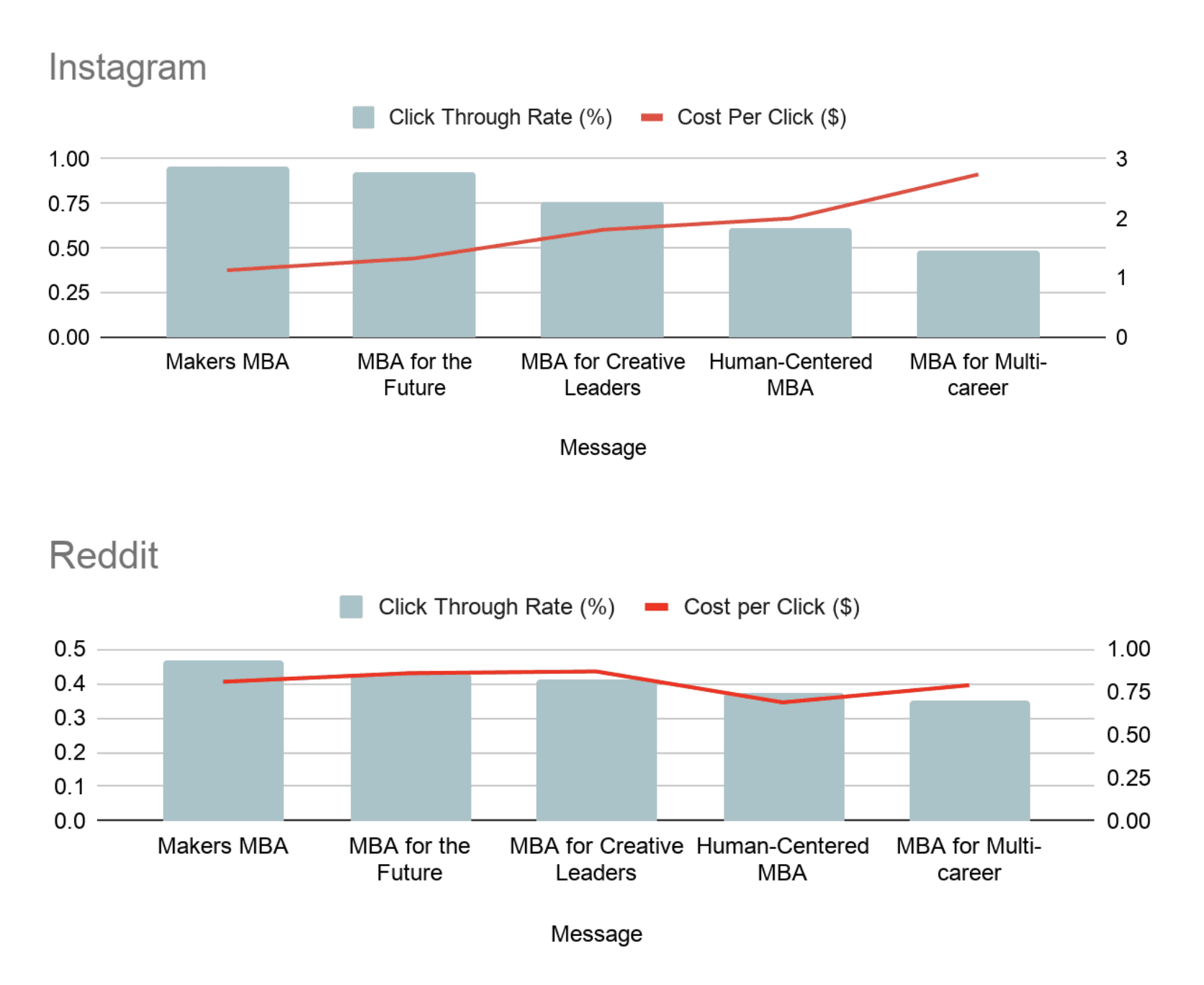
Key Insights from Message Testing
1. Concrete, action-oriented "Maker's" community as foundation
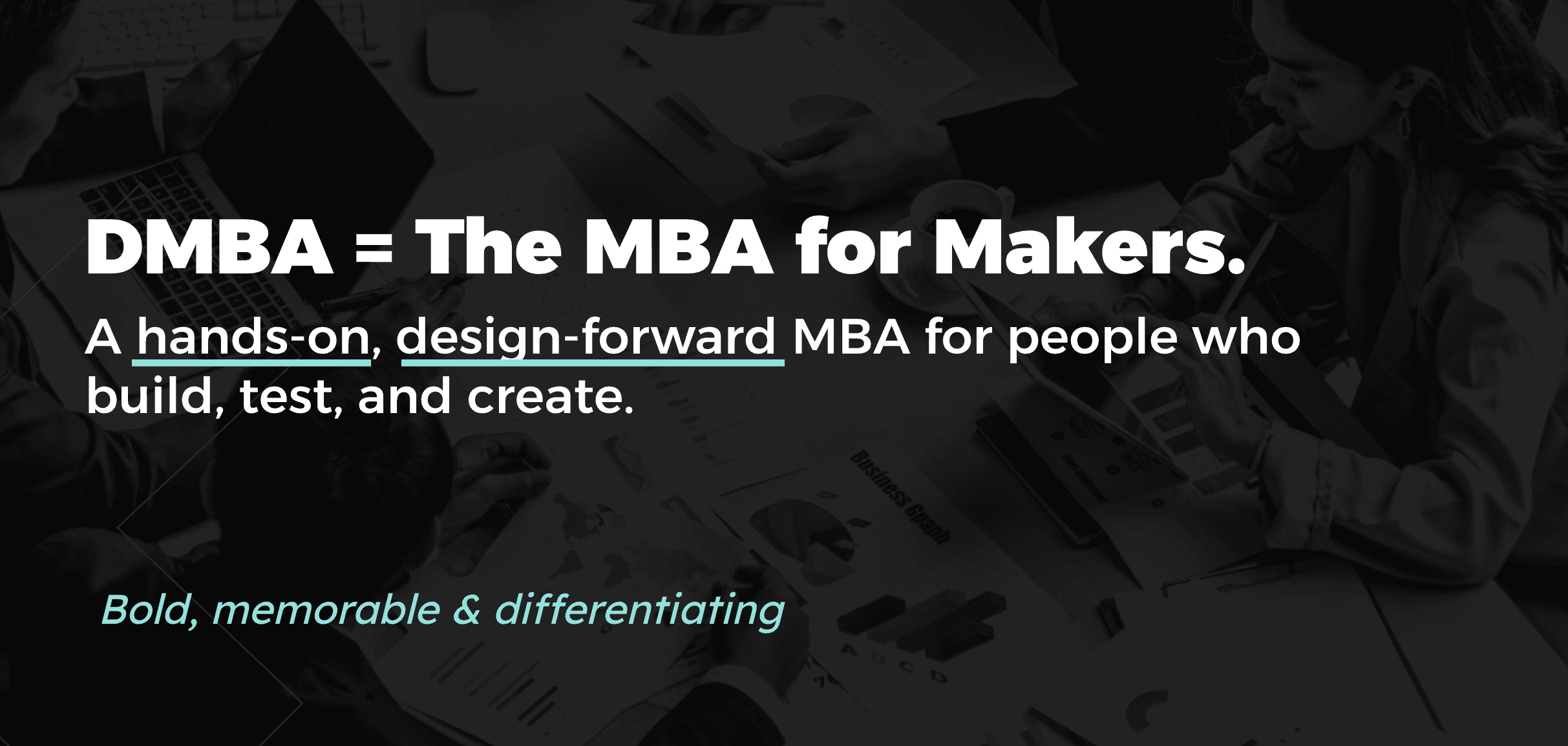
Across both Instagram and Reddit, “MBA for Makers” consistently achieved the highest click-through rate.
This suggests that at the top of the funnel, audiences respond more strongly to messaging that is:
practical > conceptual
hands-on > aspirational
concrete > philosophical
direct > vague
Rather than selling an abstract vision of leadership or impact, this framing makes the DMBA immediately legible: a place to build, test, and do.
Importantly, this message also aligns naturally with CCA’s broader brand DNA, reinforcing credibility rather than fighting against institutional perception.
2. Future-oriented framing as supporting pillar
“MBA for the Future” emerged as the 2nd strongest performer across both platforms.
While less tactical than “MBA for Makers,” this message resonated with audiences who may not fully identify as makers, but still see themselves as:
forward-looking
planning a career shift
preparing for uncertainty and change
This framing captures a broader set of motivations—particularly among growth-minded professionals who are thinking, “This is where I’m heading.”
As a result, future-oriented messaging works best as a supporting pillar, extending reach without diluting the program’s core positioning.
Content Strategy
Turning proven messages into a repeatable, high-impact content system.
Insight Recap/Strategic Direction
Based on these results, we anchored the DMBA’s top-of-funnel strategy in practical, hands-on storytelling, supported by future-facing narratives to expand reach—rather than leading with abstract or philosophical positioning.
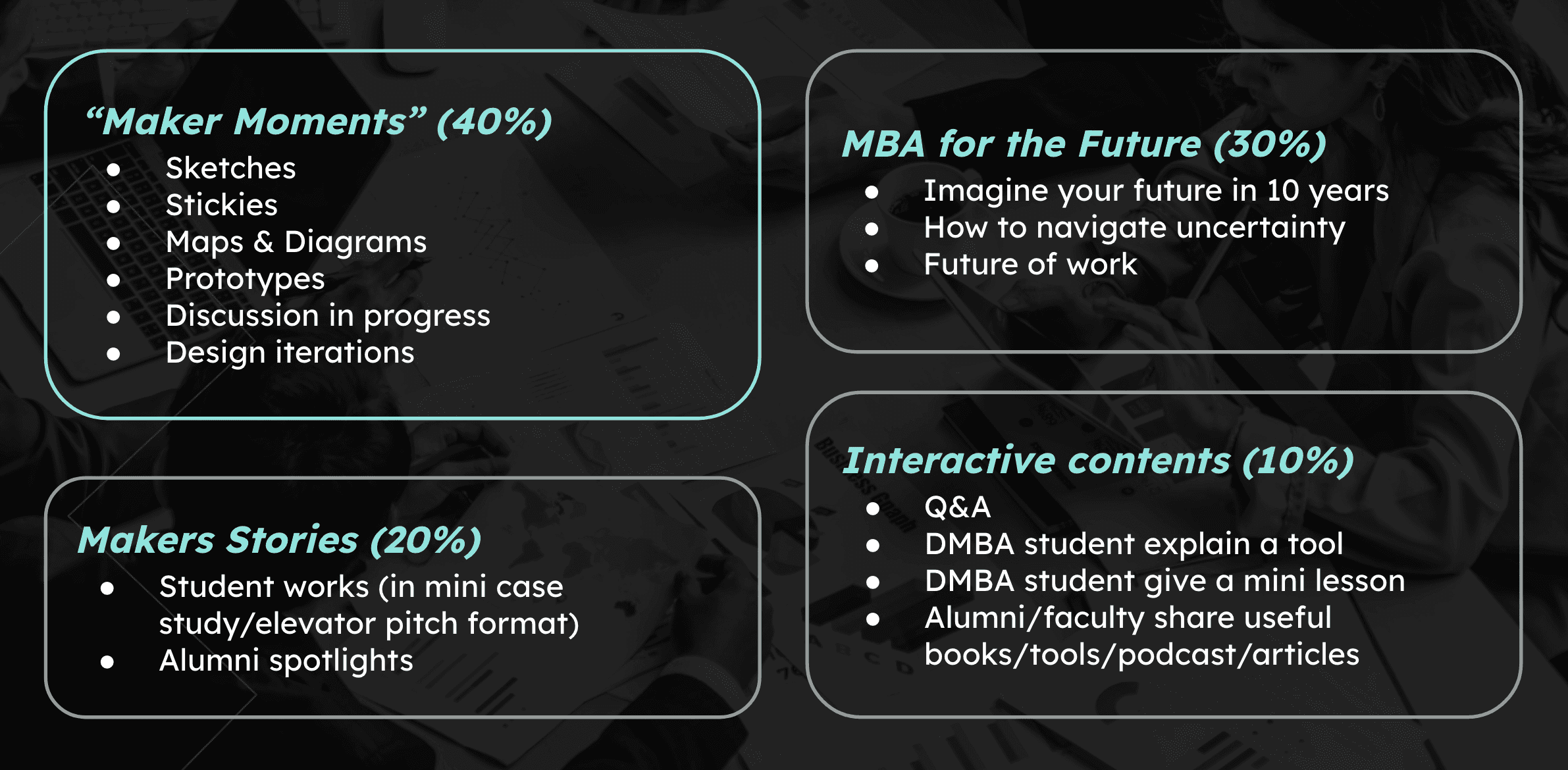
1. Content Strategy: Turning Messages into Repeatable Signals
To operationalize this messaging hierarchy, we designed a content system that consistently reinforces the DMBA as a place to do real work, while still signaling long-term relevance and growth.
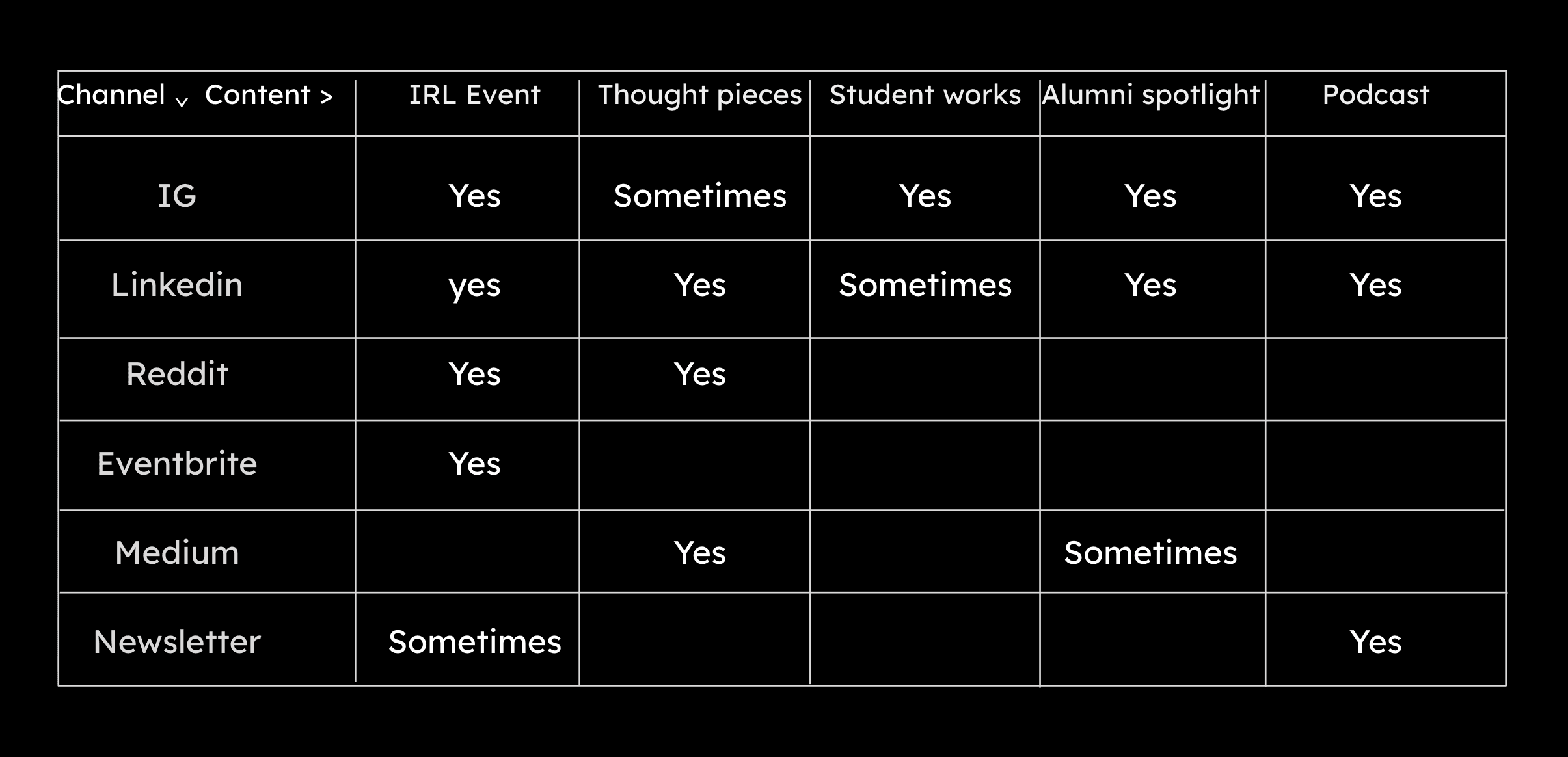
Cross-Channel Strategy: Building a Cross-Channel Matrix
Rather than creating channel-specific narratives, we treated channels as distribution layers—each reinforcing the same core story in formats that fit native behavior.
This structure allows us to maximize influence within limited resources by focusing effort on a small number of repeatable, high-impact content types.
Paid Media Strategy: Balancing Short-Term Activation and Long-Term Visibility
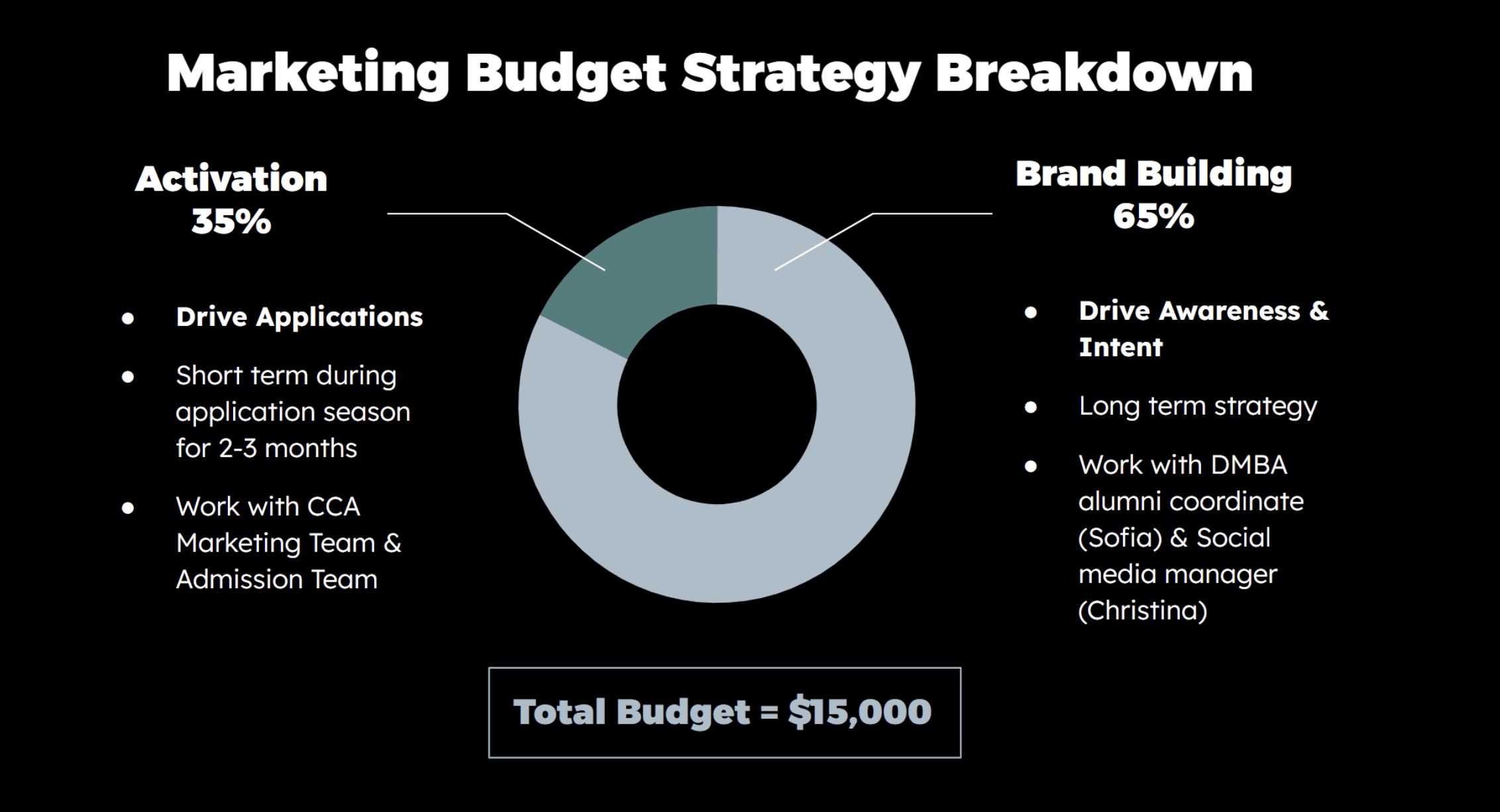
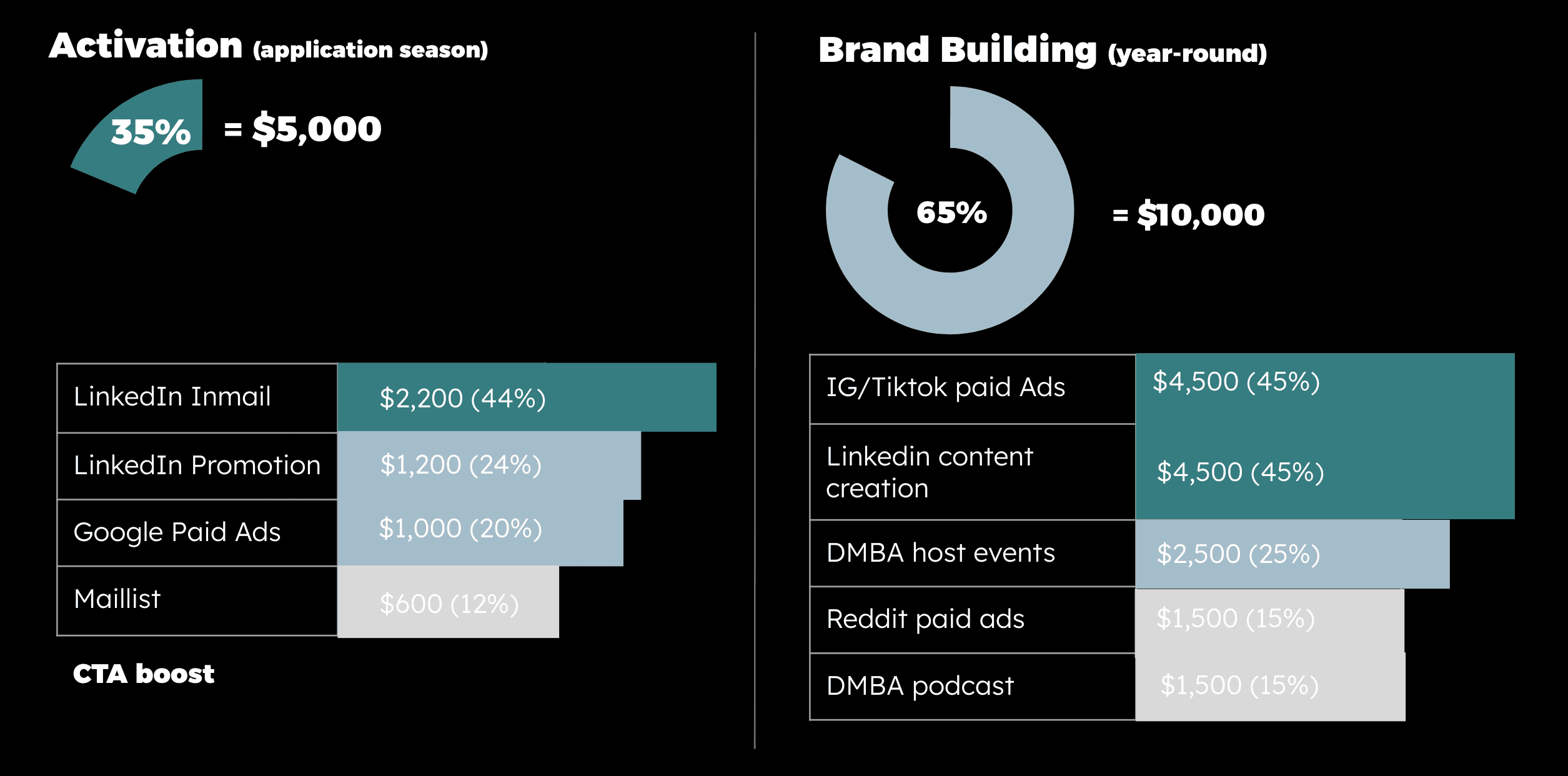
Because the DMBA’s core challenge is awareness—not conversion—we use the golden 65:35 ratio, weighted spend toward brand-building, while reserving targeted activation during application season.
Optimizing Existing Channels
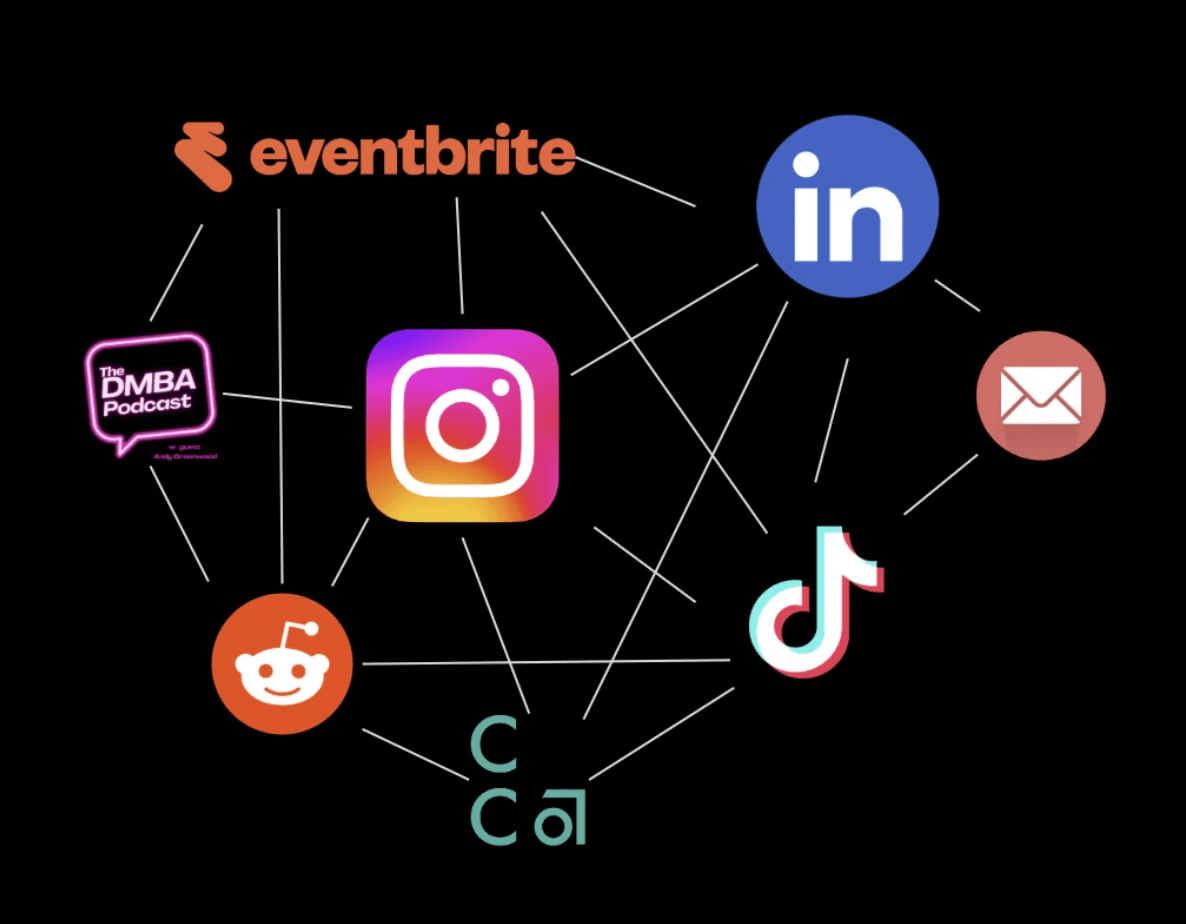
To avoid isolated touchpoints, we designed the DMBA’s channels as a connected network—where each piece of content can be discovered, reinforced, and re-encountered across platforms.
Brand Kit & Handoffs
A system designed for consistency, scalability, and cross-team adoption
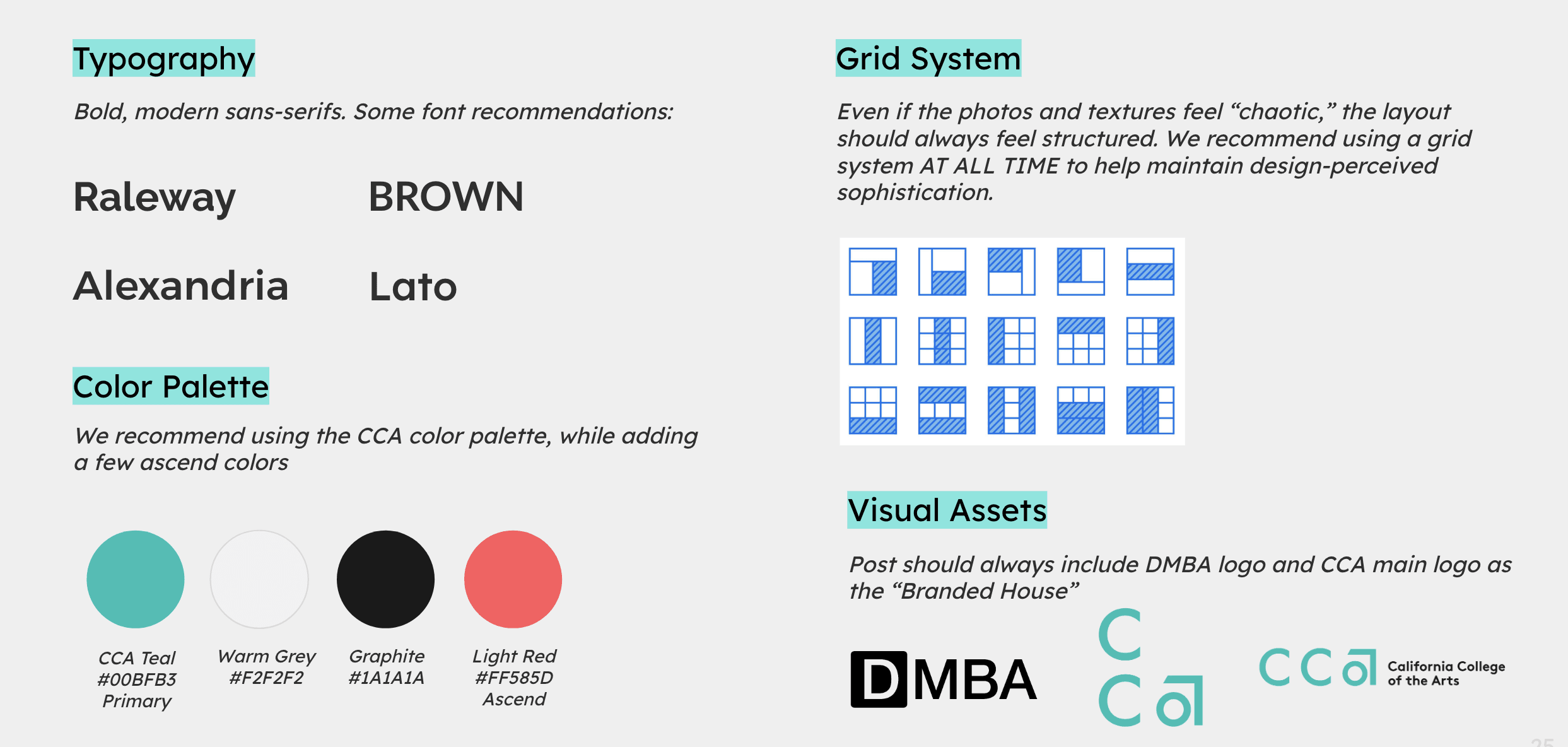
To ensure the strategy could live beyond this project, we translated the messaging and visual direction into a lightweight DMBA brand kit. The goal was not to redesign the brand from scratch, but to create clear, usable guardrails that different stakeholders could apply consistently across channels.
We intentionally designed this kit with handoff in mind—anticipating use by the program chair, alumni coordinator, and social media personnel, each with different levels of design expertise and day-to-day constraints.
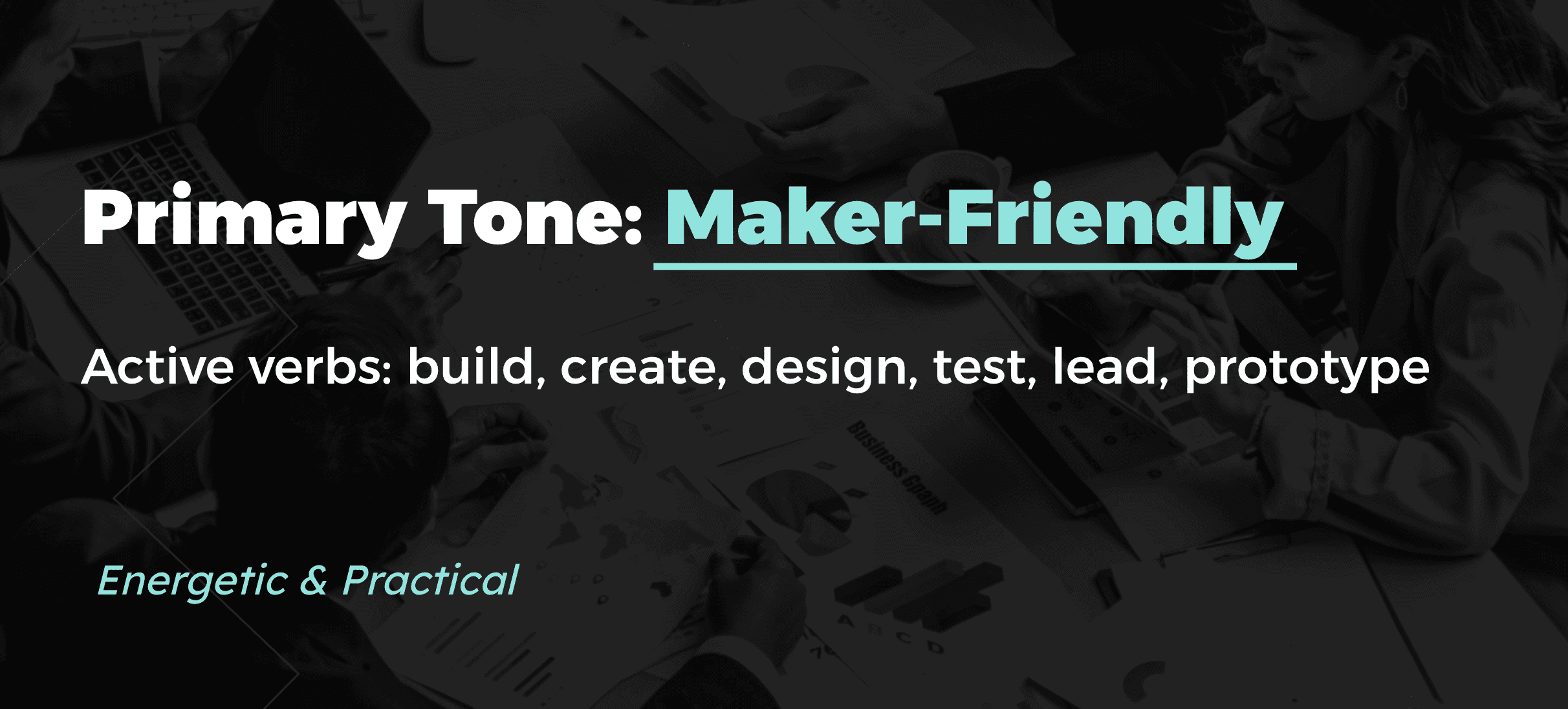
Messaging Foundations
02. Visual Guidelines
Rather than creating a standalone visual identity, we intentionally designed the DMBA to live within CCA’s branded house. This approach reinforces institutional credibility, reduces fragmentation, and allows the DMBA to benefit from CCA’s existing brand equity—while still expressing a distinct, maker-forward personality.
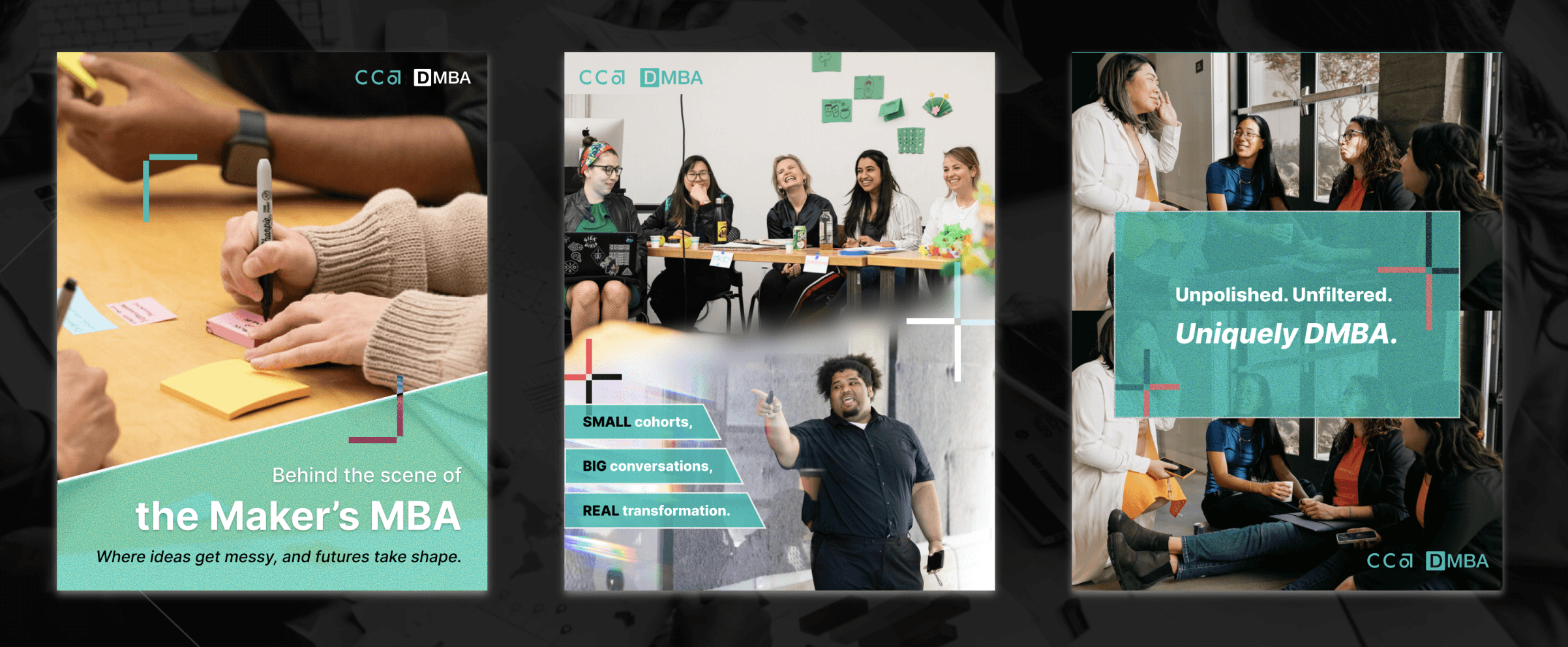
03. Sample Applications
Sample posts demonstrate how the system can be applied while maintaining a consistent DMBA identity.
04. Handoff & Ownership Model
From the start, we considered how this system would be used in practice across roles:
Program Chair — aligning messaging with academic vision and long-term positioning
Alumni Coordinator — spotlighting alumni stories and events using ready-made templates
Social Media Personnel — executing day-to-day content quickly using clear tone, layout, and asset rules
By focusing on clarity over customization, the brand kit reduces friction between teams and enables consistent execution without requiring constant design involvement.