branding
Strategy
Youth Power Fund (YPF)
Client engagement–led brand strategy for HNWI donor expansion.
TL;DR
Work Type
Team of 2
Timeline
Feb 2025 - Oct 2025 (8 months)
Context
Client-facing volunteering project
Tools Used
Figma, Mural
Project Goal
Define a donor-facing messaging strategy that enables Youth Power Fund to engage High Net Worth Individuals as part of its next phase of growth.
key constraints
As a growing nonprofit, YPF operated with limited access to standardized impact data and donor-specific insights, requiring strategy to be developed under conditions of partial information.
key Approaches
Focus Groups, 2x2 Matrix, Customer Archetypes, Brand Analysis
Context
New Audience, Undefined Expectations
About YPF
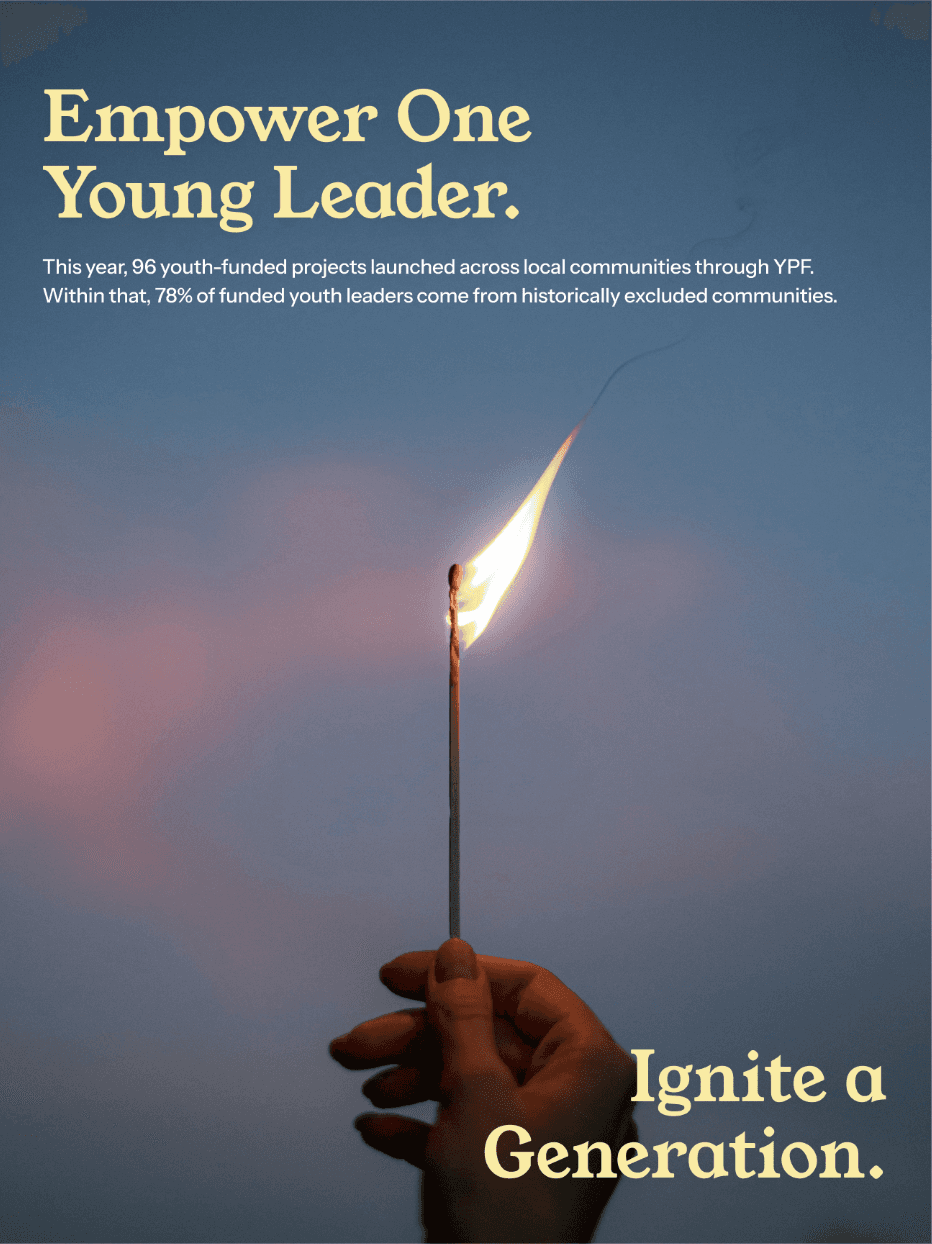
Youth Power Fund (YPF) under Northern California Grantmakers is a nonprofit that invests in youth-led initiatives, empowering young leaders to drive change in their communities.
Brand Analysis
Understanding a Brand's Component
Before exploring how YPF might engage a new donor audience, we first grounded ourselves in who YPF already is.
Vibe
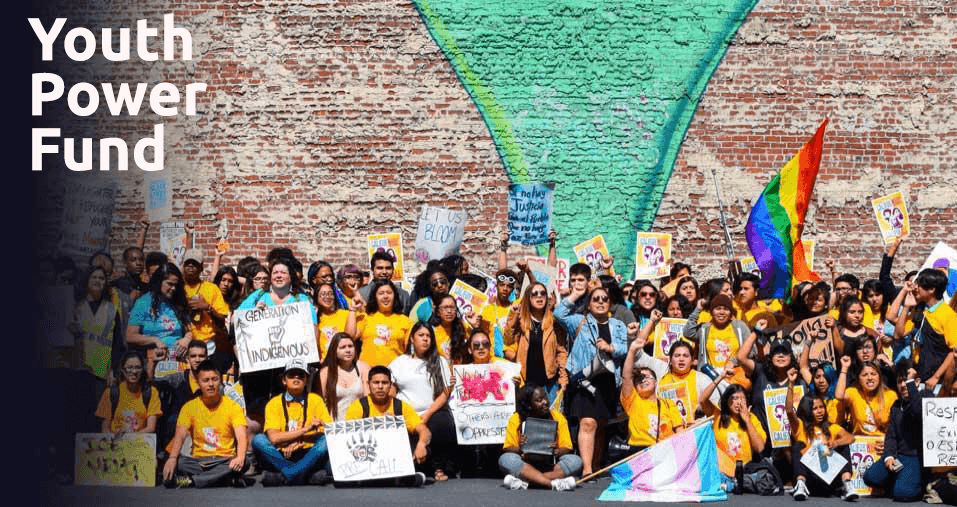
We did a visual analysis of existing YPF's assets to understand what feels YPF is trying to create.
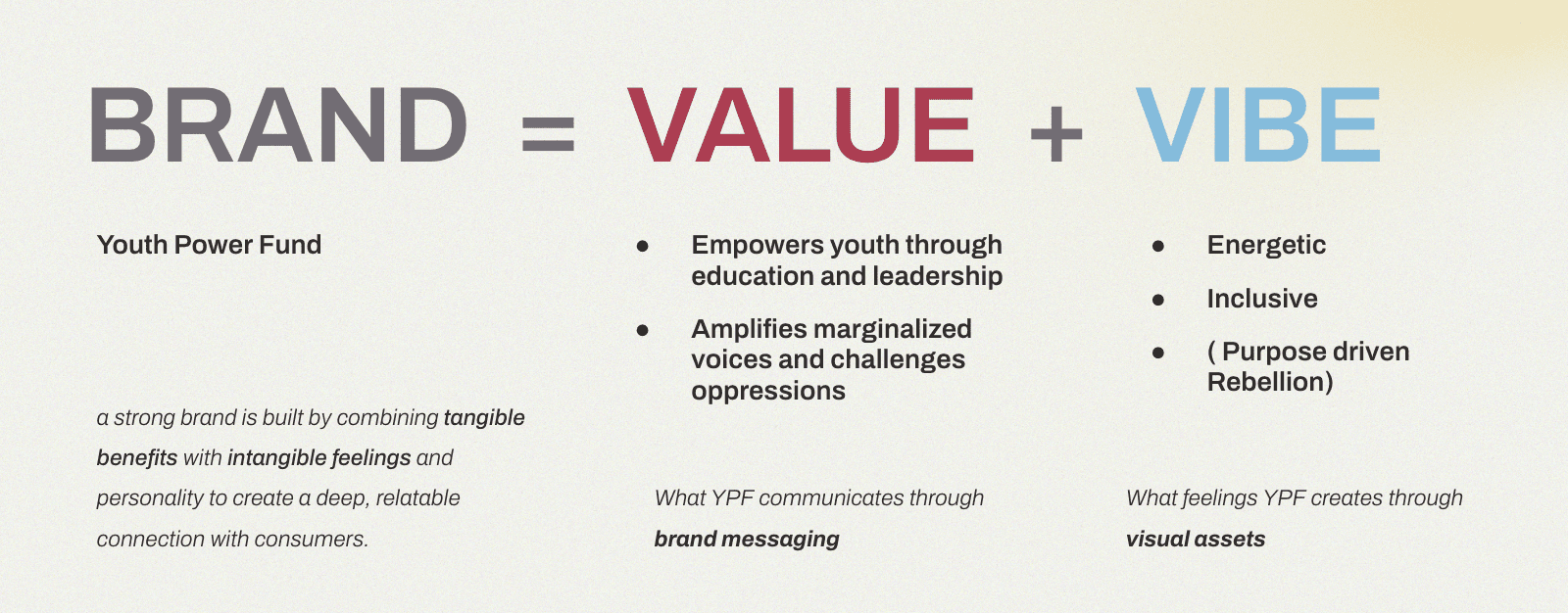
YPF’s visual and narrative expression is energetic, inclusive, and rooted in a sense of purpose-driven rebellion. This emotional layer shapes how audiences experience the organization.
Value
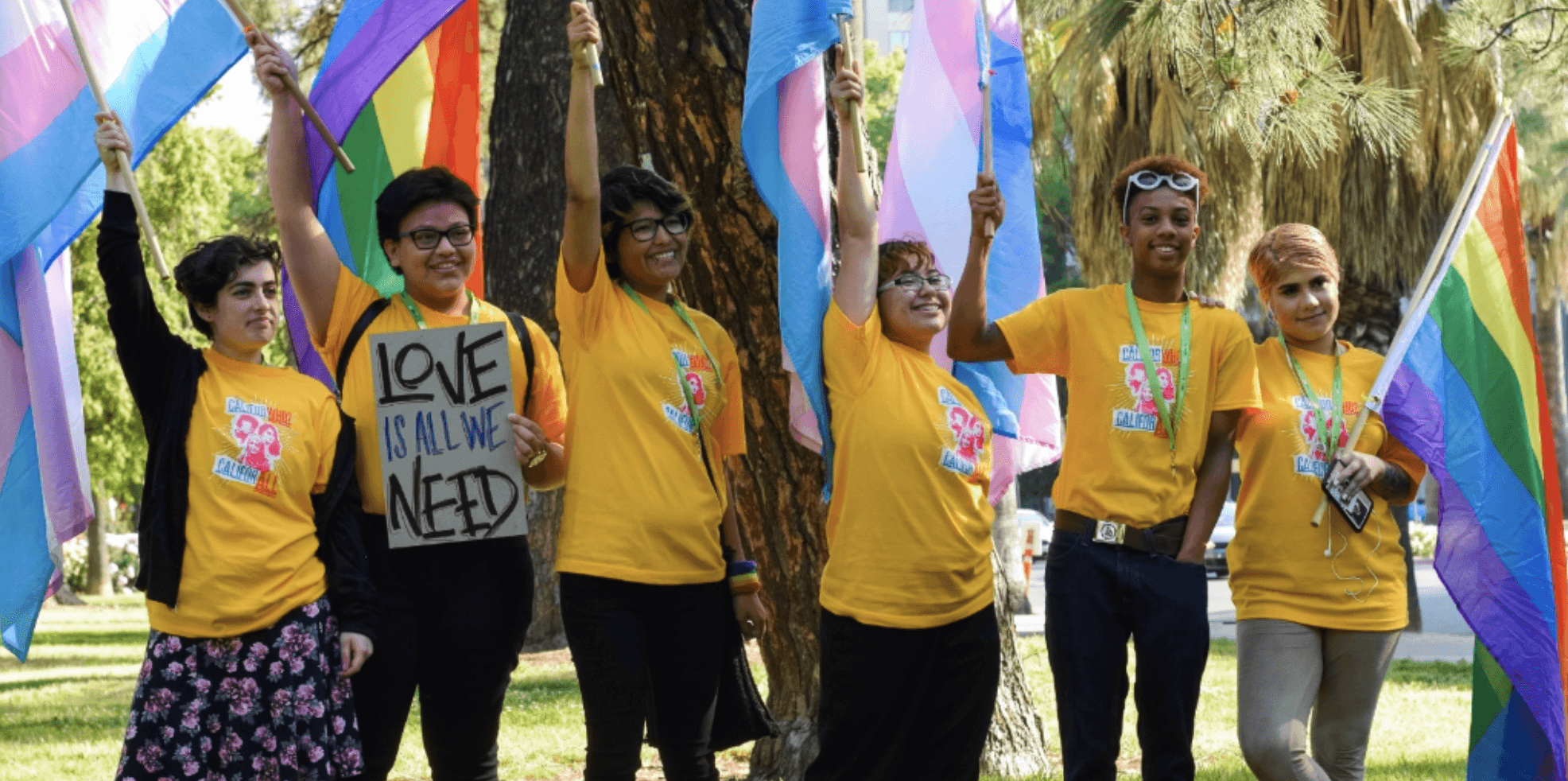
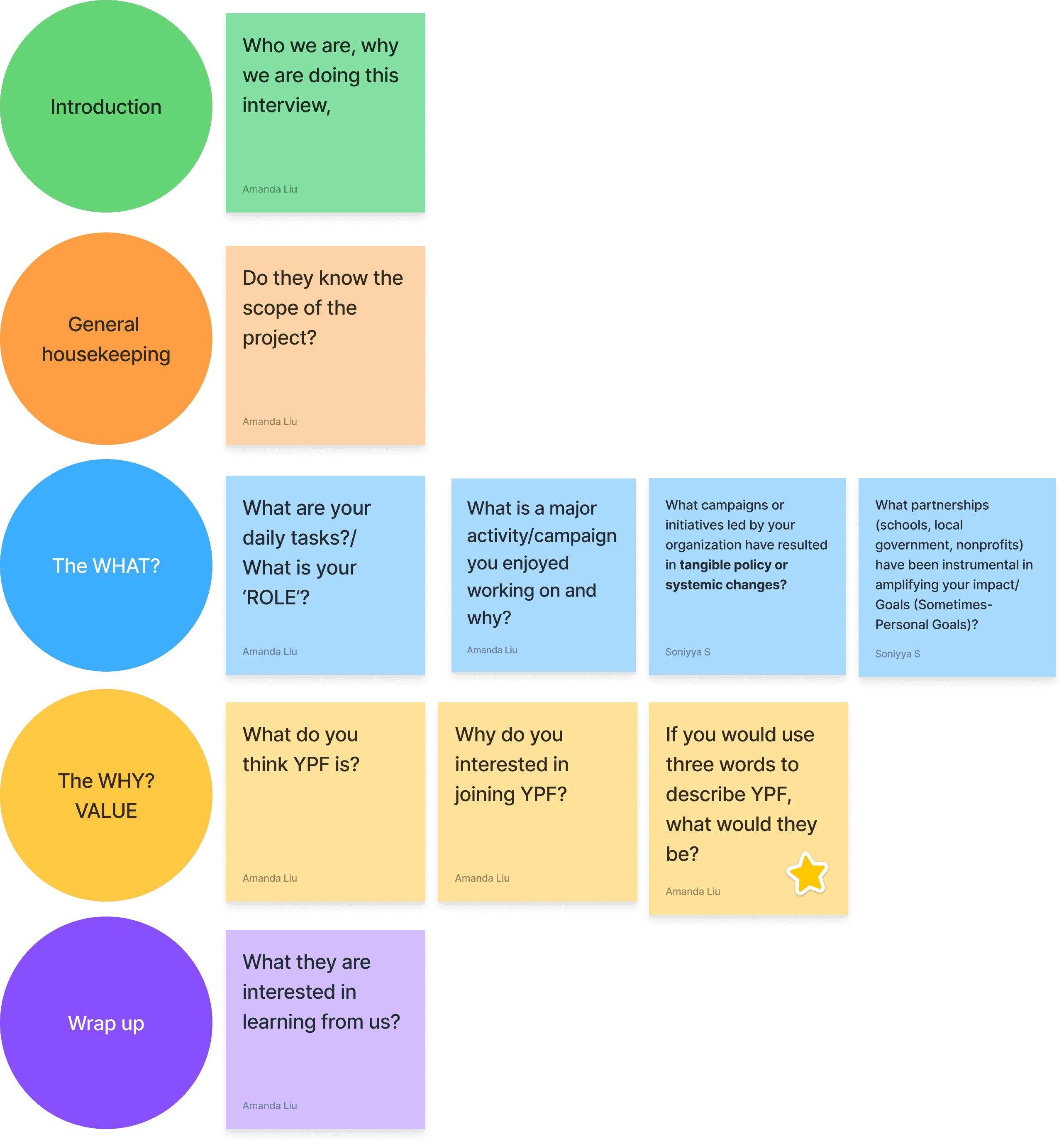
We conducted interview among YPF's youth leader in focus group in order to understand the internal values.
From the talk, we learned that YPF focuses on amplifying marginalized voices and challenging systems of oppression. These values define what YPF stands for.
Brand = Value + Vibe
We articulated YPF’s brand as the intersection of Value + Vibe:
Research & Insights
Understanding HNWI Perspectives
Through qualitative interviews with High Net Worth Individuals, we identified the following strategic insights:
“We,” not “them.”
Donors respond more strongly to narratives written in the first person. Using “we” creates a shared sense of responsibility and partnership, rather than positioning youth as a distant third party. This shift increases emotional engagement and signals collective ownership.
Start small, stay actionable.
HNWIs expect youth-led organizations to begin with focused, practical actions that demonstrate discipline and feasibility. Small, replicable wins signal maturity and help build long-term trust.
Action > claims.
Donors consistently emphasized that demonstrated impact matters more than stated intentions. Showing real results — even if early or modest — is more persuasive than promises or mission statements alone.
…but pair it with a big vision.
While donors value pragmatism, they still want to see a bold, future-oriented vision. They are motivated by the scale of potential impact and want to understand how today’s small steps ladder up to solving tomorrow’s globally relevant issues.
Strategic Options
Translating Insights into Messaging Strategy
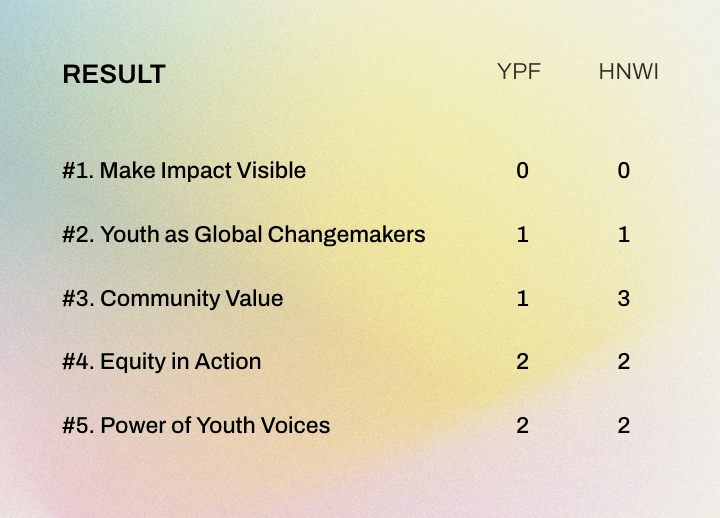
Translating these insights into action required balancing two forces: YPF’s internal brand values and the external expectations of HNWI donors. These 5 directions were designed as strategic hypotheses—each exploring a different way to align organizational values with donor motivations:
#1. Make Impact Visible
Expand
#2. Youth as Global Changemakers
Expand
#3. Community Value
Expand
#4. Equity in Action
Expand
#5. Power of Youth Voices
Expand
Testing & Validation
Integrating DIY into the UO App: Dual Pathways and Final Experience
We tested the 5 messaging direction with discreet HNWI testers, and receive the following insights:
#1. “I don’t invest in inspiration.”
HNWIs want to see what concrete impact YPF is doing that differentiates it from everyone asking for money.
A campaign emphasizing on impacts without data will only work the opposite way.

#2. How people make money reflect how they give money.
Whether donors inherited their wealth or built it themselves, heir donation decisions tend to reflect the process and value they associate with how that wealth was created. These origin-driven values influence what causes resonate most.

#3. “I don’t just assume youth are good.”
Not all HNWIs are naturally optimistic about the next generation. YPF’s challenge is to clearly demonstrate how they identify the right youth leaders and ensure they’re driving meaningful, responsible impact — in a way that feels credible and believable to donors.

#4. Youth as catalysts for systemic change.
Many HNWIs care deeply about big, systemic issues. The bridge to youth is showing that giving young leaders a platform — even if their voices are small today — helps break long-standing cycles and builds the next generation of problem-solvers for the causes donors care about most.

Decision Takeaway
Based on testing, we prioritized community-rooted messaging as it most effectively aligned HNWI trust signals with YPF’s youth-led values.
Strategy Frameworks
Designing for an Established Brand: A Balance of Ease and Challenge
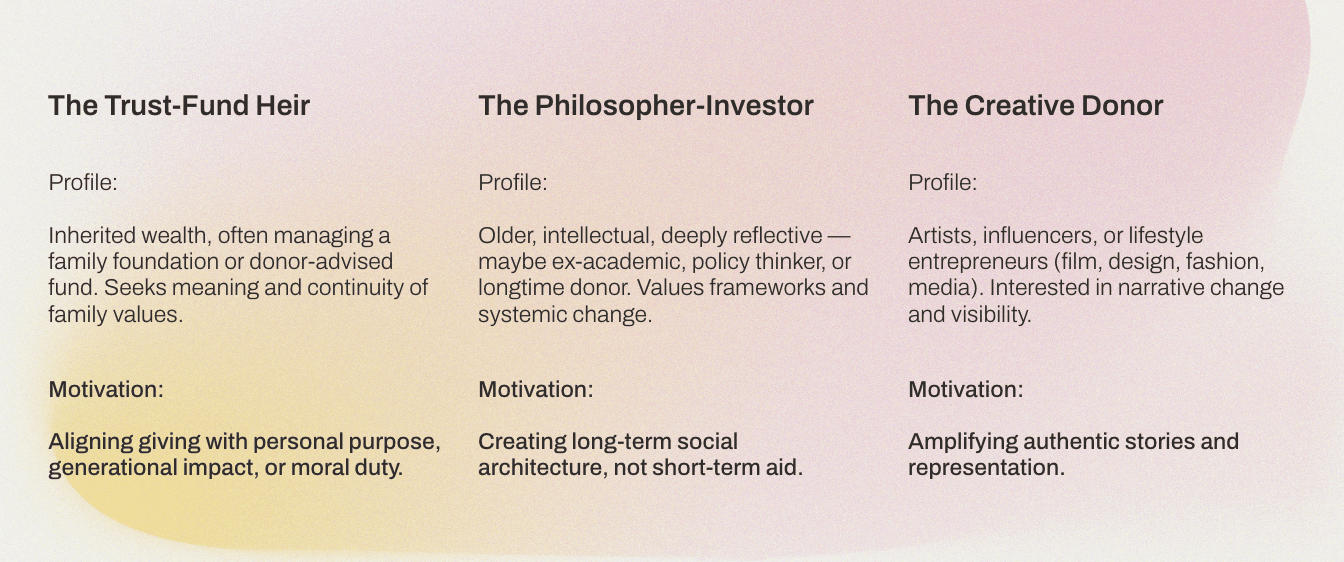
3 Main Donor Archetypes
While multiple donor archetypes emerged from our research, we intentionally focused on three primary segments who align with YPF’s current brand tone and organizational readiness.
These archetypes are more receptive to community-driven, values-led narratives, which closely match YPF’s existing voice and strengths.
Messaging Matrix: From Inspirational to Practical
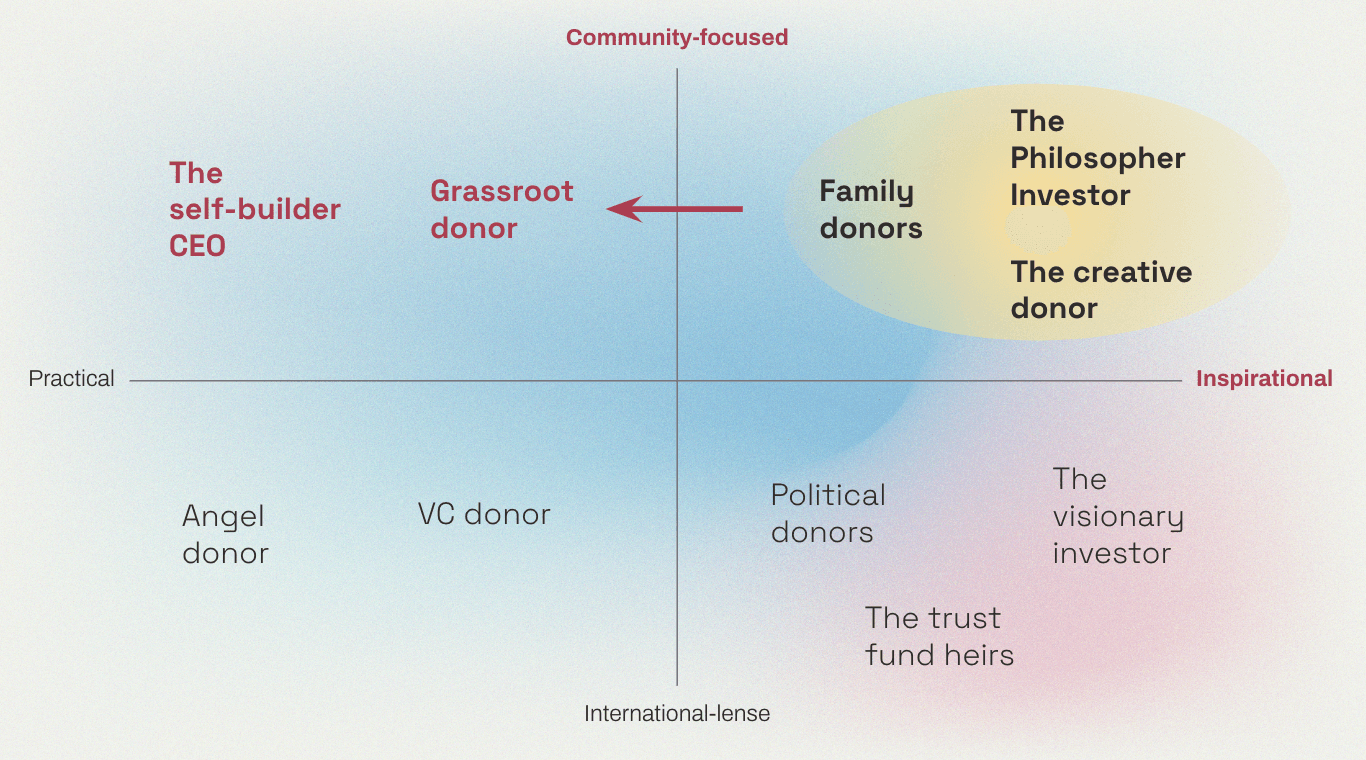
This matrix maps donor segments across two dimensions: messaging tone (practical ↔ inspirational) and value orientation (international lens ↔ community-focused).
Within the messaging matrix, these archetypes cluster in the community-focused, inspirational quadrant, making them the most effective entry point for near-term HNWI engagement.
The arrow indicates a long-term strategic shift: long term, YPF aims to expand toward more impact-driven segments—such as self-builder CEOs and grassroots donors—who prioritize practical evidence and measurable outcomes, enabling engagement with donors capable of driving larger-scale, sustained impact.
Sample Message
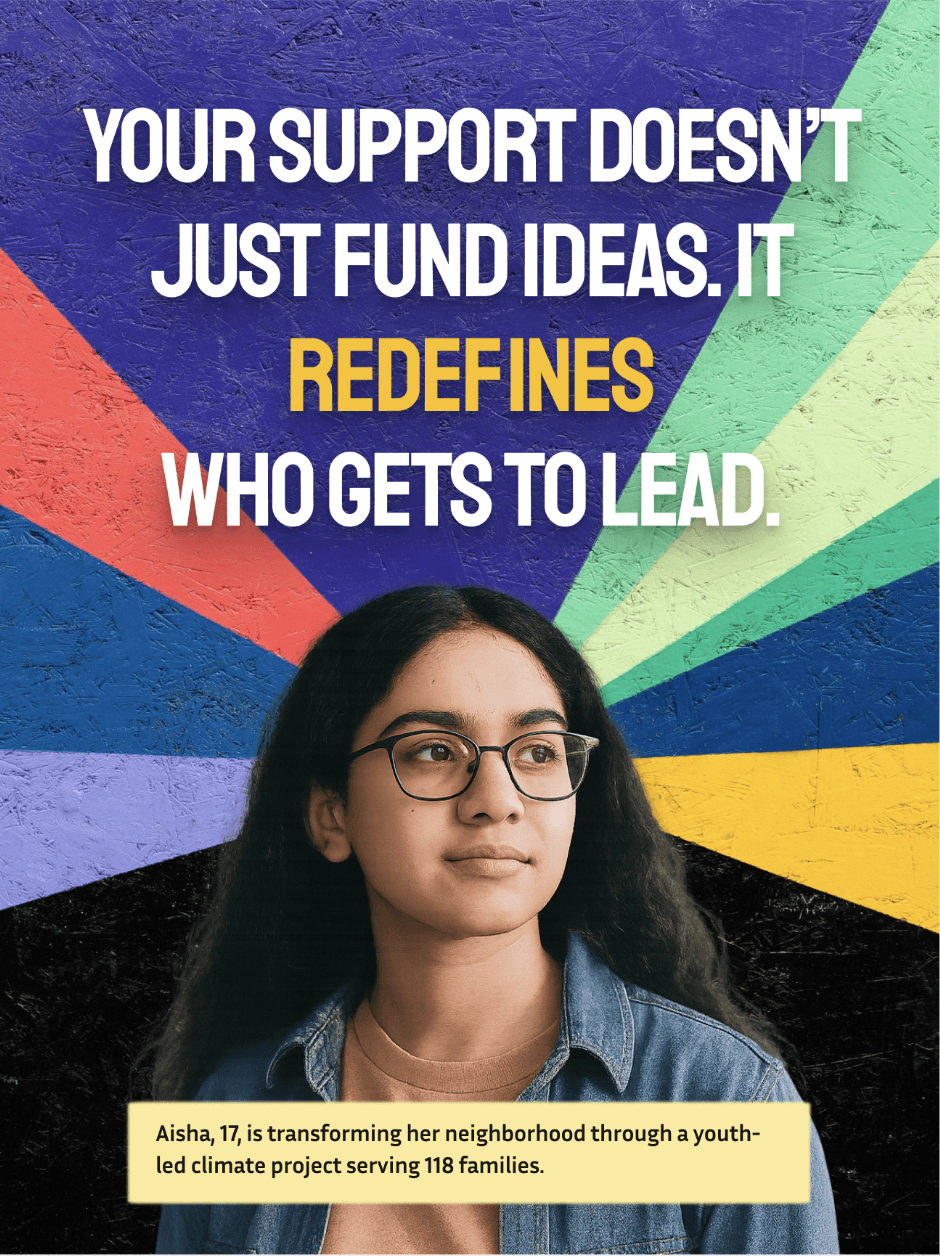
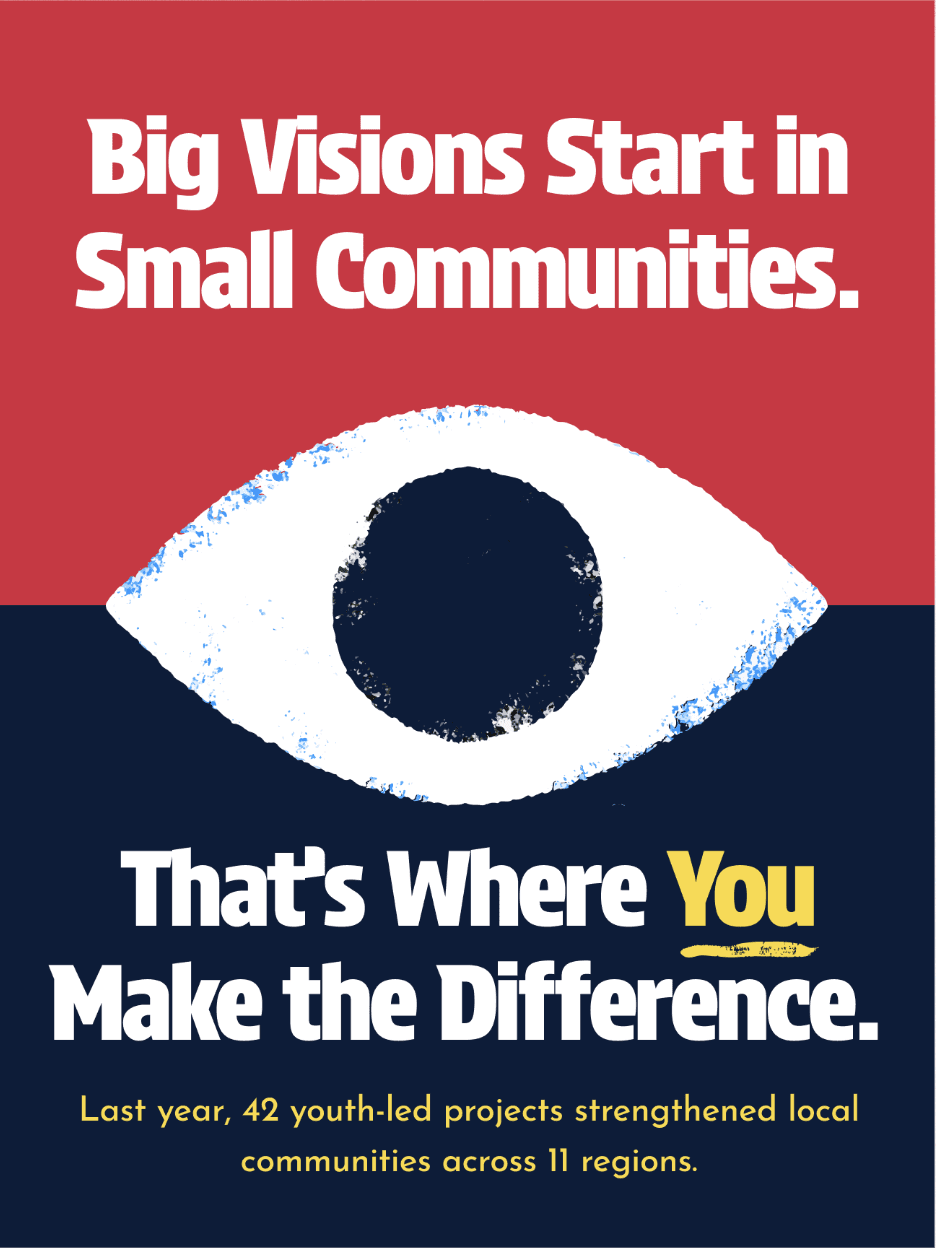
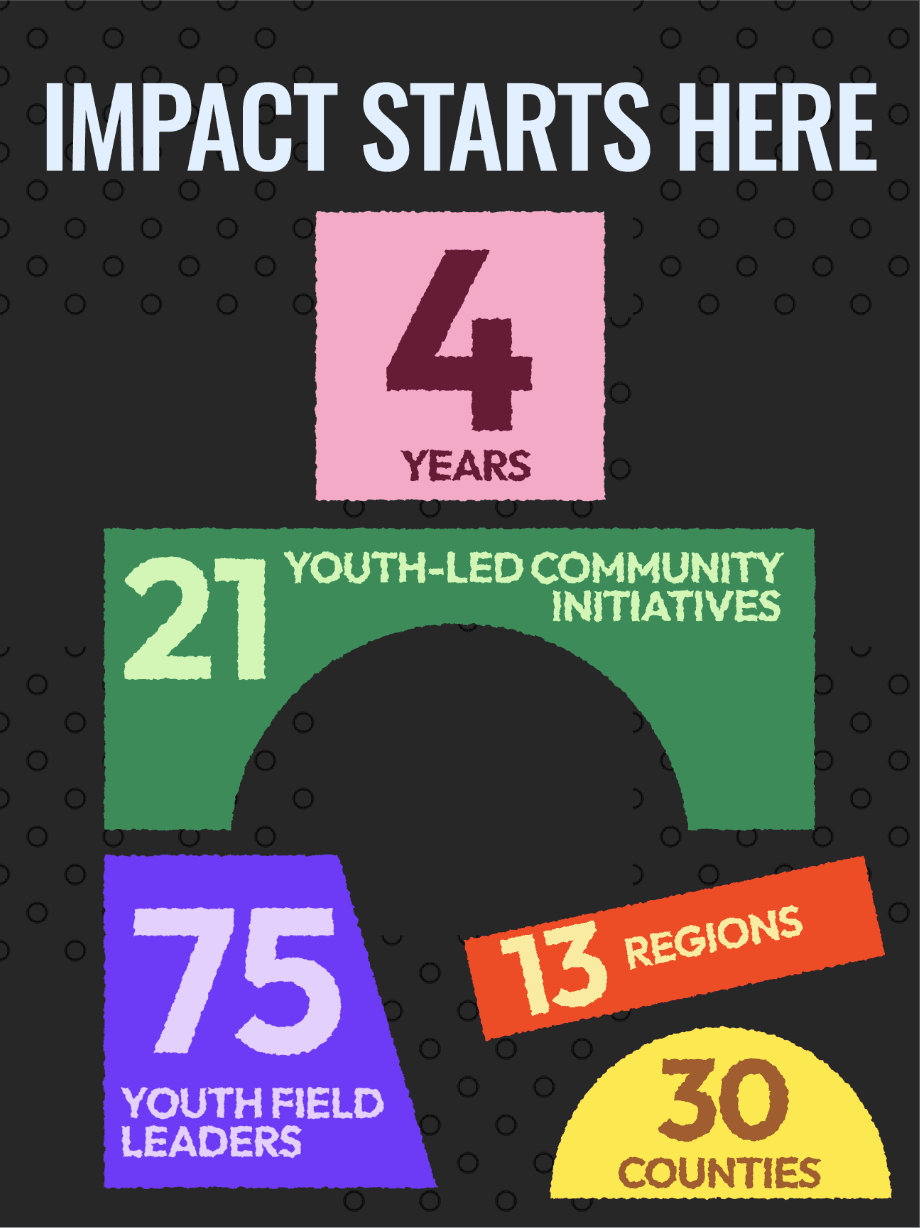
*visual rendering is for inspiration only. No real data displayed.